
Decide how the unit will be used
Organize a storage unit around the belongings you will retrieve and the way you will eventually remove everything. A unit holding an untouched shipment for a brief gap between homes has different access needs from one used regularly for household supplies. List the items you expect to need during the storage period and separate them from goods that can remain undisturbed. This decision should happen before loading. Once heavy furniture and cartons fill the space, changing the arrangement can require another handling job.
Confirm the actual storage service. Some moving arrangements keep a shipment together under the provider's control, while a self managed unit may allow visits under facility rules. Do not assume you can enter and retrieve individual cartons without checking. Ask about access hours, appointments, equipment, prohibited items, and release procedures. The layout advice here applies only within the arrangement you are permitted to manage. A useful plan connects the inventory, access needs, and facility conditions rather than treating storage as an empty rectangle that can be filled without further decisions.
Inspect the specific space
Check the unit you will use, including its door, interior dimensions, obstructions, and route from the loading area. Ask whether the advertised size is nominal and confirm the usable space. Look at lighting and the practical conditions under which you will load and visit. If something appears damaged, damp, or unsuitable, raise it with the facility before placing belongings inside. Do not assume a general description of the property answers every question about the specific unit. Record relevant concerns and the facility's response through its established process.
Measure the largest items against the entrance and intended layout. A unit can have enough total area while lacking the length or turning room needed for a particular piece. Include the hallway, lift, or other approach where relevant. Ask the facility and mover about equipment and loading arrangements. A narrow door or difficult access can affect handling even when the final floor plan appears adequate. Inspecting early gives you time to choose a different unit or arrangement before the shipment arrives and the household is committed to unloading.
Inventory before loading
Create a list of the belongings going into storage and distinguish them from goods going directly to the home. Record large furniture individually and identify cartons with numbers or clear labels. Use practical contents descriptions and note fragile or special items in the private record. Keep the inventory outside the unit where it remains accessible. An inventory packed into the back of the storage space cannot help you decide whether a particular carton is there or where it should be found.
Update the list whenever something enters or leaves. Record the item's location using a simple system that matches the layout. The description should be understandable to another household member who may visit later. Avoid storing passwords, full account details, or unnecessary private information in the same worksheet. Keep detailed values and sensitive records securely elsewhere. A useful storage inventory identifies what is present, where it is located, and what changed. It does not need an elaborate code that becomes harder to maintain than the belongings themselves.
Draw a practical layout
Sketch the unit with the door, fixed obstructions, major furniture, and planned access route. Place the largest items on the drawing first, then identify areas for cartons and any approved shelving. Consider the removal sequence as well as the loading sequence. If a bed and kitchen supplies will leave first, they should not depend on moving every other item out. The layout can be simple, but it should show how a person reaches the goods without climbing over belongings or dismantling an unstable stack.
Check whether the proposed arrangement is realistic for the objects. Irregular furniture leaves spaces that may not be safely usable. A long item may prevent a central aisle or require a different orientation, which must be suitable for that item's construction. Do not force the drawing to match an assumed capacity. If the space cannot support safe access and appropriate placement, reconsider the inventory or unit. The goal is a workable storage arrangement, with enough room for handling and retrieval, rather than the greatest possible number of objects per square foot.
Group by retrieval priority
Divide belongings into groups based on likely access. Frequently needed supplies should remain near a safe route, while longer term items can occupy less convenient positions if the arrangement remains stable. Keep seasonal goods grouped and label them clearly. Avoid assuming that every carton from the same old room has the same retrieval priority. A home office box containing immediate work supplies differs from one containing archived material that will remain untouched. The expected use should guide the position.
Tell loaders about those priorities before they begin. Without that information, a crew may reasonably organize for efficient loading rather than your later visits. Confirm that the planned arrangement is within the service scope. If the unit is already partly filled, review what must remain accessible before adding the next load. A small amount of deliberate rearrangement may prevent important items from disappearing behind newly arrived furniture. Record any changed location in the inventory so the plan remains useful after the actual loading differs from the original sketch.
Pack containers for storage conditions
Use sound containers suited to their contents and the facility conditions. Pack clean, dry belongings and follow relevant product or material instructions. Ask the facility about restrictions and the actual environment it provides. A description such as climate controlled should be clarified for your needs rather than treated as a universal guarantee. Delicate textiles, electronics, paper records, artwork, and other vulnerable items may need specialist advice. Do not assume a packing method suitable for a short local move is appropriate for an uncertain storage period.
Check carton bases, corners, and closures before placing them in the unit. Avoid overloading containers or forcing lids closed. Keep liquids and restricted materials out according to facility and transport rules. Label on visible sides and use a private inventory for detailed values or sensitive contents. If a container becomes damp or damaged, address the condition through an appropriate process instead of hiding it behind another package. Suitable preparation reduces the chance that a retrieval visit becomes an urgent repacking job because the original container no longer protects what it holds.
Stack within safe limits
Arrange goods according to their construction, weight, packaging, and any manufacturer or facility instructions. Do not assume every carton or furniture surface can support another load. Heavy contents should have appropriate stable placement, and fragile packages need protection from pressure and shifting. Avoid building a stack that requires climbing or awkward lifting to retrieve an item. If the safe arrangement uses more floor area than expected, reconsider the layout rather than increasing height merely to make the inventory fit the unit.
Use shelving only when it is suitable, permitted, correctly assembled, and used within its instructions. Ask the facility about any restrictions before bringing it in or attaching anything. Do not improvise structural supports from unrelated furniture or weak cartons. Keep access routes and required clearances available. The household should be able to inspect and remove belongings without relying on a delicate balance that works only while nothing is touched. Stable organization protects both the stored goods and the people who will visit, load, or empty the space later.
Protect furniture and its parts
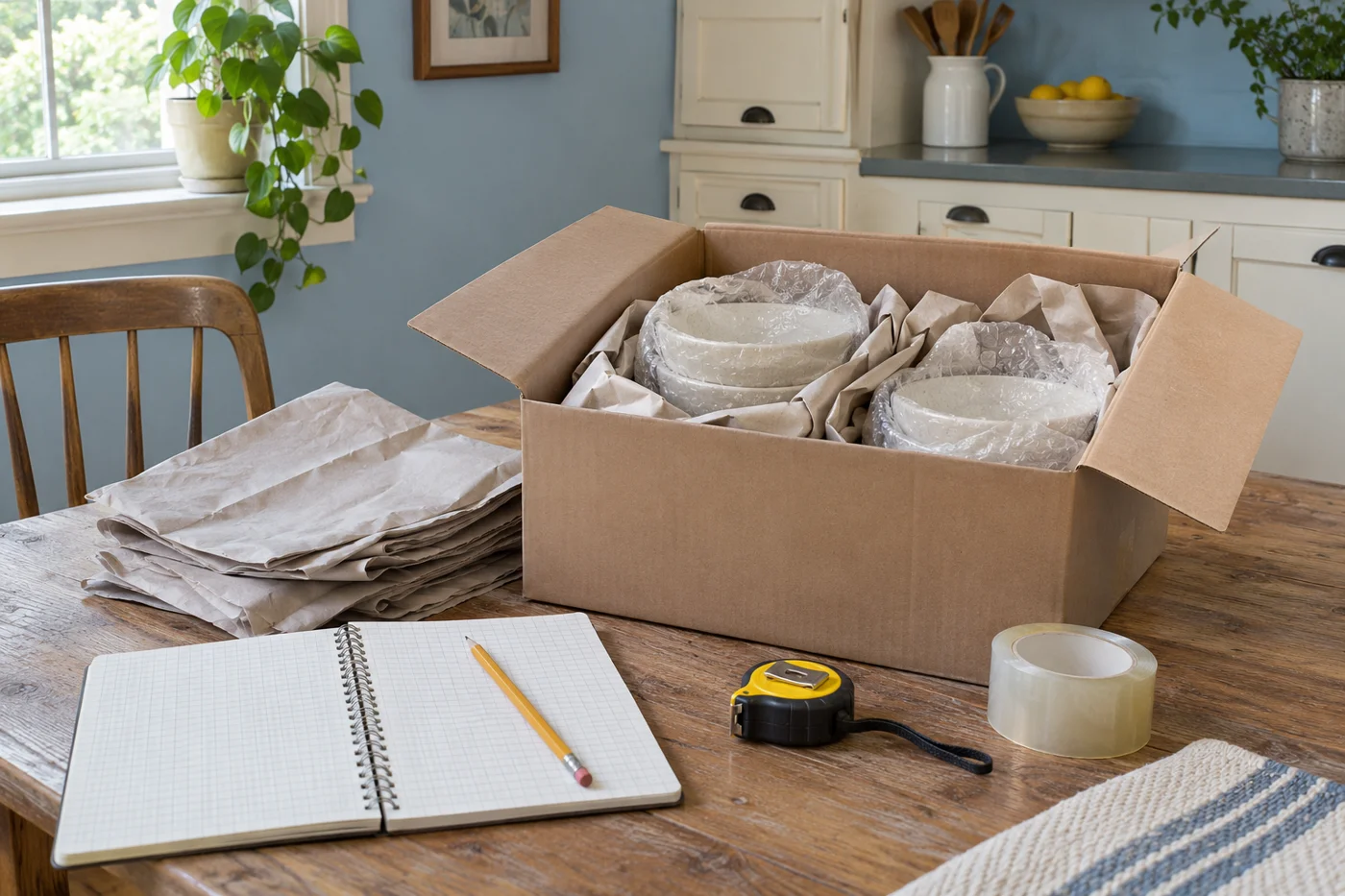
Prepare furniture according to its design and the mover's or manufacturer's guidance. If disassembly is appropriate, keep hardware in secure labeled containers and record its location. Identify large components so similar rails, panels, or shelves do not become mixed. Protect vulnerable finishes and edges using suitable materials. Do not apply adhesive directly to a delicate surface without confirming the method is appropriate. The storage arrangement should preserve the relationship between the furniture, its components, and instructions needed for later assembly.
Choose an orientation that suits the item rather than one that merely saves space. Some pieces may be damaged by unsupported or unusual positioning. Ask an appropriate professional if uncertain. Avoid using drawers or hidden cavities as unrecorded storage for loose parts or unrelated goods. The item may be moved or handled differently during retrieval. Keep the inventory clear enough that another person can identify the complete set. Furniture should leave storage ready for an appropriate reassembly process, with known parts and condition, rather than arrive at the new home as an unexplained collection of components.
Keep labels visible and consistent
Use clear destination or category names and an inventory number where helpful. Place labels so at least one remains visible in the planned arrangement. Avoid writing detailed values, account information, or other private data on the exterior. A label should help locate and handle the container, while the fuller record remains secure outside storage. Use the same names on the layout and inventory. A system that changes terminology halfway through loading can make a simple search unexpectedly difficult.
If a carton is repacked or divided, update its label and the inventory together. Remove or clearly supersede misleading old descriptions rather than adding several conflicting notes. Keep a marker and suitable labels available during loading for corrections. When someone else visits the unit, give that person the relevant current record and instructions. Do not assume they can recognize a box from a description such as the one near the chair if the chair has moved. Simple, maintained identification is more useful than a detailed initial system that is never updated.
Manage visits and removals
Before a visit, identify what you need and check the inventory for its location. Bring appropriate help and equipment where required, following facility and handling rules. Avoid planning to retrieve a heavy or awkward object alone simply because it appears near the door. Check the access hours and any appointment or loading arrangements. Keep essential facility information available without sharing credentials unnecessarily. A planned visit can be more efficient and safer than opening the unit and deciding spontaneously which large items to move.
Update the record as goods leave, and review the stability of the remaining arrangement. Removing one object can change how neighboring goods are supported or accessed. Reorganize appropriately rather than leaving a gap that makes another stack unsafe. Do not replace retrieved items in a new location without noting it. If several people use the unit, agree on who maintains the inventory. Clear records prevent duplicate purchases and repeated searches, while a brief layout review keeps the storage plan usable as the contents change over time.
Check the arrangement over time
Review the unit and stored goods at appropriate intervals for your circumstances and the facility's access rules. Look for visible changes that need attention and report facility concerns through the established process. Keep records of any issue and response. Do not assume a container remains suitable indefinitely because it was sound on loading day. If the storage period extends, reconsider whether the preparation and conditions still match the belongings. Seek appropriate advice for sensitive items rather than waiting until removal to assess them.
Review the inventory at the same time. Decide whether the household still needs the stored goods and whether access priorities have changed. Avoid repeatedly buying replacements for items that are present but difficult to retrieve. A longer storage period can justify a different arrangement, but evaluate actual costs and practical needs using the facility's terms. Keep notices, payment records, and relevant correspondence separate from the goods. The storage plan should remain an active record of useful possessions and their requirements, rather than a closed decision that is never revisited.
Plan the final move out
Arrange removal through the facility's current process and confirm any notice, appointment, loading, or account requirements. Give the mover the actual inventory and access details. Identify which belongings leave first and where they will go. Check the destination route for large items before the removal day. Storage can make it easy to forget dimensions or components, so review the record rather than assuming the shipment is identical to the one originally placed in the unit. Report relevant changes to the provider before estimating or booking.
As goods leave, compare them with the inventory and inspect accessible condition. Keep appropriate records for any concern and follow the relevant provider process. Check the empty unit carefully for parts, small cartons, and items behind doors or shelving. Complete cleanup and handover according to the agreement, then confirm the account's closing status and final bill. Retain useful documentation until open questions are resolved. A deliberate exit closes both the physical storage arrangement and its administrative tasks, leaving the household with a complete, identifiable shipment for the next destination.
Test a mixed household layout
Imagine a unit holding a dismantled bed, a sofa, kitchen cartons, seasonal decorations, and work supplies. The household expects to retrieve work items regularly and move the bed into a new home before the remaining goods. The layout should preserve access to those groups and keep the bed's hardware and components identified. The sofa's position must be suitable for its construction, and fragile kitchen cartons need protection from pressure. This hypothetical example shows how retrieval plans affect organization; it does not prescribe a universal unit size or stacking height.
Sketch the large pieces first and check the door and maneuvering space. Add stable carton groups and a usable route to priority items. Tell the loaders what needs to remain accessible. If the plan only works by blocking the door or burying the first removal group, revise it before unloading. Apply the same test to your inventory and ask what happens when the first item leaves. A storage layout is useful when it supports change, rather than depending on every object remaining in exactly the original position until the unit is emptied completely.
Keep the record current and private
Maintain one current inventory and layout, with the date of the latest change. Save a copy outside the unit and make the relevant information available to anyone authorized to retrieve goods. Use references for sensitive items instead of copying private records into a shared worksheet. Keep facility access information through an appropriate secure method. If a household member removes or relocates something, update the inventory promptly. The record should describe the real arrangement, even when it differs from the careful sketch prepared before loading.
Before a major visit or final removal, review unanswered questions with the facility or provider. Confirm access, equipment, timing, and the person responsible for each task. Keep the next action visible until it is completed. Afterward, close the relevant record and retain documents needed for any unresolved concern. This simple discipline makes storage easier to manage across weeks or months, especially when different people help at different stages. The household can then find belongings, explain their location, and plan removal without relying entirely on the memory of the person who first packed the unit.
Review that arrangement whenever the inventory, access needs, or storage period changes.