
Put building access ahead of mileage
A Connecticut move can cover a short distance and still require careful coordination. The difficult part may be carrying a wardrobe through a narrow stairwell, reserving an elevator, or finding a legal place for a truck. Start by examining both buildings. Note the floor, entrance, parking location, walking distance, and any time restrictions. These details allow a moving company to assess the work more accurately than a bedroom count alone. Recheck these details when the date approaches and share any changes promptly.
Create an access file with photographs and measurements. Include the route from the street to your door, then the interior turns that large furniture must pass. Ask the owner or manager about restrictions you cannot verify yourself. A truck route that looks convenient on a map may be unsuitable for the vehicle. Give the driver the precise entrance and let the transportation provider assess the route and vehicle requirements. Also note where the crew can safely set down a bulky item between stages. A tight landing without usable floor space changes how a piece can be handled. Leave that decision to the moving provider after it reviews the measurements, and keep the area free of boxes before the first large item reaches it.
Understand the geography of your move
Connecticut's compact size does not make every move a quick local job. A household moving between opposite sides of the state faces different scheduling needs from a household moving to the next neighborhood. Traffic, loading conditions, and the crew's starting location also affect the day. Ask how travel is included in the estimate and whether the proposed schedule allows for the particular route rather than an ideal driving time.
Moves involving New York, Massachusetts, or Rhode Island cross a state boundary even when the homes are relatively close. Identify that fact early when discussing the shipment. The applicable moving requirements may differ from those for a move entirely within Connecticut. Verify the business and the rules through the appropriate official resources. Do not infer the type of move from the distance alone or from a company calling itself a local mover. For example, a hypothetical move from Stamford to a neighboring state may involve fewer driving miles than a move within Connecticut. Those miles tell you little about the legal classification or building work. Put both full addresses on every request so each provider evaluates the same journey and explains the arrangement it is actually offering.
Measure furniture before committing to placement
Older houses and apartments can have doorways, stairs, and landings that limit furniture access. Measure the widest parts of each large item, including fixed legs, arms, and trim. Measure the available openings and turning space at both addresses. A doorway measurement alone will not show whether a long sofa can turn immediately inside it. Send photographs to the mover and ask whether an additional assessment is needed.
Decide which pieces are worth moving before the packing begins. If a desk cannot reach the intended room, possible choices include a different room, professional disassembly when appropriate, or leaving it out of the shipment. Avoid relying on an unplanned window lift or removing building components on moving day. Those are separate decisions that require suitable expertise, permission, equipment, and a price. Record the chosen plan in the inventory. Sketch the intended room layout using the furniture dimensions rather than the apparent size of a listing photograph. Include door swings, radiators, outlets, and room entrances. Leave practical space to walk around beds and seating. This exercise can reveal that a piece fits through the entrance but prevents the room from functioning once placed inside.
Choose who handles each part
You can hire a company to pack and transport the household, arrange transportation while packing yourself, or combine a rental vehicle with hired labor. Each arrangement places different responsibilities on you. For example, booking loading help does not necessarily include supplying pads, securing the load, driving the truck, or unloading at the destination. Ask exactly what the crew provides and what equipment must be waiting when it arrives.
Consider the working hours available to your household. Packing after work may be realistic for a small apartment but difficult for a home with a large basement and attic. If time is limited, ask for a separate price for the rooms or fragile items that would take you longest. Buying targeted help can be easier to evaluate than choosing between two broad packages whose included services are not clearly defined. If friends are helping, confirm their availability for specific hours and suitable tasks. Give someone responsibility for refreshments, errands, or cleaning if carrying is unsuitable for them. A realistic division of work avoids discovering that the people you counted as a loading crew can only stay briefly or cannot safely handle the larger belongings.
Give the survey a complete picture
A useful moving survey includes every space holding belongings that will travel. Show the basement, attic, garage, balcony, and any separate storage area. Mention furniture that will be bought before the move and items that will be removed beforehand. If an inventory changes, tell the company promptly. An estimate based on the old list should not be treated as an unchanged promise for a different shipment.
Point out pieces that need unusual handling, including large aquariums, exercise equipment, artwork, and heavy cabinets. Describe their condition as well as their size. A damaged joint or loose shelf can affect handling. Ask the surveyor to record these details rather than assuming the loading crew will remember a casual conversation. Keep your own photographs and written notes so you can review whether the proposed plan addresses each obstacle. During a video survey, use adequate lighting and move slowly enough for the surveyor to ask questions. Open the spaces that hold packed items instead of showing only the room's visible furniture. Afterward, review the inventory sent by the company and request corrections before comparing that estimate with another provider's assessment of your household.
Compare the terms behind the price
Read estimates with the same questions in front of you. What labor, transportation, materials, and preparation are included? What could change the total? Who handles furniture assembly, and which items are excluded? Is travel between the company's location and your home charged separately? Ask each company to explain its own pricing basis. Avoid applying one company's definitions to another company's paperwork simply because both use familiar moving terms.
Look closely at cancellation, rescheduling, payment, and storage terms before accepting an offer. A move tied to a property transaction may need flexibility that a lower priced reservation does not provide. Ask how changes are requested and when they become effective. Keep both the first estimate and the final written agreement. If an answer is important enough to influence your choice, it is important enough to have documented. Record deposits separately from the remaining balance so you do not count the same payment twice in your budget. Ask which payment methods are accepted and when each amount is due. Keep receipts that identify the business receiving the money. An unexplained change of payment recipient deserves clarification before you proceed with the transaction.
Coordinate apartment and condominium rules
Request moving instructions from both buildings as soon as the addresses are confirmed. Management may need advance notice, elevator reservations, designated loading access, or documents from the moving company. Requirements vary, so obtain the actual instructions rather than assuming a neighboring building follows the same process. Send the documents to the mover and check who will complete each required step. A verbal understanding with one employee may not reach the person on duty.
Reserve enough time for the building portion of the move, including setup and the final removal of protective materials. Ask what happens if another reservation follows yours or the truck arrives late. Confirm whether the elevator dimensions suit the large items on your inventory. On moving day, keep the manager's contact information accessible and identify a household member who can answer access questions without leaving the loading entrance unattended. Make sure the reservation covers the correct building, date, and entrance. Keep a copy available for the crew and for the person meeting it. If management changes the loading location, relay the change promptly. A message buried in your own inbox will not help the driver who has already followed the earlier instructions.
Check street parking and truck approach
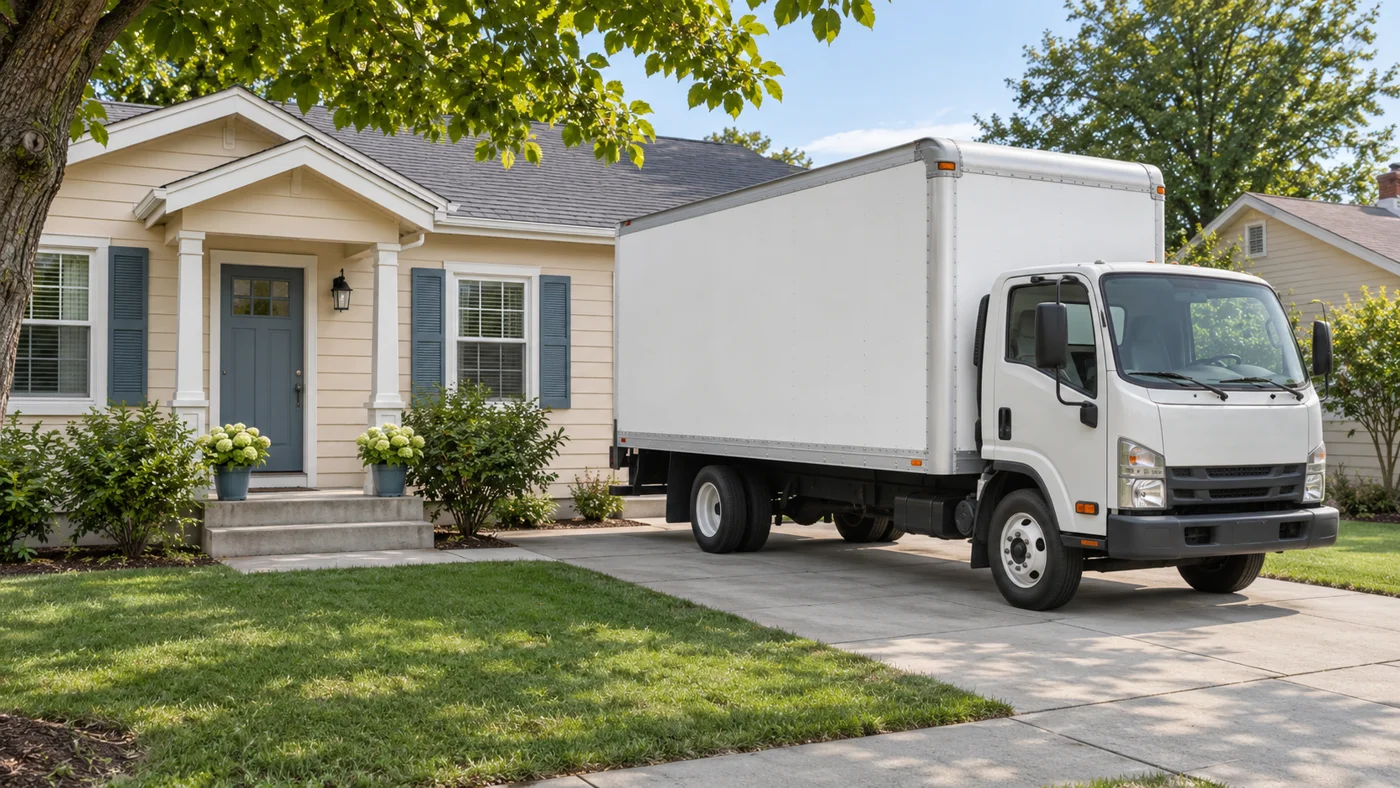
A convenient empty curb is not proof that a moving truck can stop there. Ask the relevant property contact or local authority about the loading arrangement for your address. Describe the vehicle and intended duration accurately. Where a permission or reservation is required, establish who obtains it and how the driver receives the information. Do not place cones or signs in a public space without confirming that you may do so.
For driveways, tell the mover about slopes, sharp turns, low branches, narrow gates, and surfaces that may not support the vehicle. Keep passenger cars out of the agreed loading area. If the truck must stop farther away, ask how that changes labor or equipment needs. The goal is to settle the carrying route before arrival. A crew should not have to discover halfway through the day that its only planned access is unavailable. Check the route in daylight where possible and photograph any obstruction you cannot describe clearly. Mention construction near the entrance without assuming it will be finished by moving day. Ask the property contact for updates as the date approaches. The final approach deserves another check even when the rest of the route remains unchanged.
Build a weather plan for the date
Connecticut moving conditions vary across the year and across individual days. For a winter move, discuss snow removal, treated walking surfaces, and what happens if travel is disrupted. Confirm who clears each property and when the work will be finished. A cleared front step does not help if the route to the loading area remains blocked. Review conditions close to departure and use current official travel information when needed.
In warm or wet weather, protect belongings from prolonged exposure and keep safe walking routes available. Ask how the mover handles floor protection and wet equipment. Avoid laying loose plastic where people must carry heavy items. Keep your household essentials dry in separate bags and leave spare clothing accessible. If conditions require a delay, communicate with both buildings so a changed arrival does not conflict with an access reservation. Build a small weather kit for your own use with suitable footwear, dry layers, and bags for wet clothing. Keep it accessible rather than packed among seasonal items. If the forecast changes, update the plan instead of simply adding pressure to the schedule. The move may need a different sequence or a revised receiving window.
Sort basements attics and storage areas early
Storage spaces often hold the least remembered part of a household. Begin there before ordering boxes or approving an inventory. Separate what you will keep, donate, recycle, discard, or discuss with a specialist. Check local collection arrangements for items that cannot go into ordinary rubbish. Do not leave unwanted materials for the movers unless removal is explicitly part of the agreement. Transportation and disposal are different services.
Examine stored belongings for moisture, dirt, pests, and structural damage before packing them with clean household items. Dry items fully and follow appropriate handling guidance for anything questionable. Keep chemicals, fuels, and other restricted materials apart while you confirm the mover's acceptance policy. If an object has been inaccessible for years, allow time to inspect it. Moving an unopened problem to the next basement usually makes the eventual work harder. Give donation and collection tasks their own dates. A pile marked donate still occupies space and can accidentally enter the shipment if it remains beside packed boxes. Confirm what the recipient accepts and who transports it. Keep rejected items on your task list rather than assuming a collection appointment has removed every unwanted belonging.
Pack room labels that match the destination
Use destination names that helpers can recognize immediately. If the new home has two rooms that could be called an office, choose distinct names and put matching signs on their doors. Number boxes within each room and keep a short contents list. Label the top and sides so a stacked box can still be identified. Mark fragile contents where appropriate without suggesting that a label replaces adequate internal protection.
Keep dense items in manageable boxes and fill empty space so contents do not shift. Protect delicate surfaces from abrasion, and follow the maker's instructions for electronics or specialty equipment. Set aside a clearly marked group of boxes for early access. These might contain bedding, toiletries, basic kitchen supplies, and work necessities. Keep medication, identification, keys, and essential documents with you instead of relying on access to the shipment. Avoid writing valuable contents prominently on exterior labels. A neutral box number can connect to a more detailed private inventory. At the same time, provide the handling information the crew actually needs. Separate privacy from identification: you should still be able to tell which room receives the box and whether special care is required.
Plan the property handover separately
Moving your possessions and handing over a property are connected tasks with different requirements. Make a checklist for cleaning, keys, access devices, photographs, and the final walkthrough. Confirm the required condition directly with the relevant agreement and property contact. If cleaning occurs after loading, preserve enough time and supplies to do it. Do not pack every cleaning item into a truck that leaves before you finish the rooms.
At the destination, verify when possession begins and whether repairs or contractor work will affect unloading. An empty home may still be unavailable if access has not been granted. Ask how a delayed handover would change the receiving plan. If temporary storage becomes necessary, obtain terms for both storage and the later delivery. Avoid treating a shipment's arrival as a way to force an uncertain property schedule to become final. Photograph the rooms after your belongings are removed and again when you first enter the destination, if permitted. Save the images with dates and the relevant property documents. They can help distinguish a building condition from a moving issue. A clear initial record is easier to use than competing recollections after several days of unpacking.
Keep household travel workable
Plan where people and pets will be while the crew carries belongings through open doors. Arrange supervision away from the working route. Children may need familiar supplies and a predictable place to rest even during a short move. Pets need secure containment and their usual essentials. The person supervising them should not also be expected to direct every piece of furniture or resolve the moving paperwork simultaneously.
A household driving separately should carry what it needs if delivery is later than expected. Include clothing, chargers, food arrangements, and overnight supplies. Keep important contact information offline as well as on your phone. If your own route or arrival time changes, notify the delivery contact promptly. A move works better when the people receiving the shipment are reachable and the driver knows who has authority to approve placement and access decisions. Choose a meeting point if separate cars arrive at different times and one person holds all the keys. Give another adult access to the essential contact details. Avoid storing the only copy of an entry code in a device with a depleted battery. Small access failures can delay unloading even when the truck arrives as planned.
Inspect delivery without rushing the record
Before unloading begins, show the crew the destination room labels and discuss large furniture placement. Keep a simple floor plan available if it helps explain the layout. Check items against the delivery inventory and note visible concerns accurately. Do not sign a statement that describes an inspection you did not perform. Read the paperwork and ask questions about any wording you do not understand before completing it.
If you discover damage, take clear photographs and preserve relevant packaging while you review the reporting procedure. Keep correspondence factual: identify the item, the observed problem, and when you noticed it. Check the applicable requirements rather than assuming every type of move has the same process or deadlines. Store delivery records, estimates, approved changes, and receipts together so you can reconstruct the transaction without searching through unrelated household messages. Check assembly work that was included in the agreement before the crew leaves where practical. Identify missing hardware or parts while the relevant packaging is still nearby. Do not test an unstable item by loading it with possessions. Ask the provider how to resolve the issue and record the agreed next step with your delivery notes.
Establish the first week in the new home
Unpack the rooms needed for ordinary daily routines first. Set up beds, basic bathroom supplies, and a usable kitchen area before tackling decorative items. Keep cardboard and wrapping material in a designated place away from exits and walking routes. Check large furniture placement before filling drawers and shelves. Moving an empty cabinet a short distance is easier than unloading it again after the room has been fully arranged.
Use the remaining inventory to find anything missing and to plan the rest of unpacking. Confirm utility accounts, mail arrangements, and other address changes with the organizations involved. If you are new to Connecticut, check official requirements that apply to your circumstances rather than relying on another household's experience. Finish by reviewing the move budget and retaining the useful records. The practical details you captured can make future maintenance, claims questions, or another move easier. Keep the moving paperwork after the boxes are gone. Organize it by provider and date, including rental records if you used separate equipment. Remove personal information from boxes before recycling them. Once rooms are usable, note which supplies and services helped so your next plan can rely on your own experience rather than vague impressions.