
Confirm when the apartment is yours to use
Before booking the move, confirm the date and time you can collect keys and enter the apartment. Read the lease and the property's moving instructions, then ask the responsible contact about anything unclear. A lease start date, office opening time, and permitted delivery window may be different. Record the confirmed arrangement and the person who can answer a question on arrival. Avoid promising a mover access based only on an expectation that the apartment will probably be ready when the truck reaches it.
Check what the property supplies and what you must arrange. This can include utilities, access devices, parking, delivery instructions, and appointments. Keep the relevant documents accessible outside the moving load. If another person will collect keys or receive furniture, confirm that arrangement with the property and provider where needed. The first apartment plan should begin with usable access and clear responsibilities. Buying household items before those facts are settled can create deliveries that arrive too early or appointments you cannot attend.
Build a budget around actual obligations
List the payments and expenses associated with the apartment and move using your own agreements and quotes. Keep rent, property payments, utilities, transport, packing supplies, furniture, and everyday household needs in separate categories. Record which amounts are confirmed and which remain estimates. Avoid treating every cost as due on the same day or assuming that a payment made before moving is additional to a total when it is actually credited toward it. Clear categories help you see what money is committed and what remains available.
Plan purchases in stages. The first days require somewhere appropriate to sleep, basic food preparation or a meal plan, personal supplies, and a usable bathroom. Decorative items and extra furniture can follow after you understand the space. Do not build the budget around invented standard prices or a list of everything another household owns. Use actual costs and your own needs. Keep receipts and provider confirmations together, and review the budget as decisions change. A modest plan that matches your circumstances is more useful than a complete shopping list you cannot realistically fund.
Measure before accepting furniture
Measure the apartment's rooms and the route from the loading area to each intended furniture position. Include doors, corridors, stairs, elevator openings, and tight turns. Ask the property manager for access information where you cannot inspect directly. A sofa can fit the living room floor area and still fail at the stairwell. Use actual item dimensions, including relevant projections and protective packaging. If a piece is doubtful, obtain the mover's assessment before arranging collection or delivery.
Consider the surrounding space needed to use furniture. Chairs, drawers, doors, and ordinary walking routes require clearance beyond the item's footprint. A large desk may leave no practical access to storage, while a bed can obstruct the only convenient path through a room. Make a simple layout using the furniture you expect to have first. Leave room to revise it after arrival. Avoid accepting a free or inexpensive piece solely because it is available; transport, assembly, fit, and eventual removal are also part of the decision.
Inventory what you already have
Make a list of belongings coming from your current home, storage, or another person's property. Include furniture, clothing, kitchen items, electronics, linens, and documents. Identify who owns shared or borrowed items and confirm what you are permitted to take. If family or friends offer furnishings, record the item, condition, collection date, and transport responsibility. A general promise of a table is less useful than knowing which table, whether it fits, and how it will reach the apartment.
Use the inventory to avoid duplicate purchases. Check whether a useful item is already available before adding it to the shopping list. Mark anything that needs cleaning, repair, assembly, or specialist preparation. Decide which possessions will stay behind and confirm that arrangement with the relevant person. Do not leave an uncertain pile for moving day. A clear inventory supports the transport estimate and gives you a practical starting point for the apartment, with missing essentials visible and optional purchases separated from immediate needs.
Choose a realistic moving method
Decide who will pack, load, transport, unload, and assemble belongings. A small first apartment move may suit several arrangements, but the inventory and access should determine the choice. A rental vehicle still needs a suitable driver, equipment, and dependable help. A labor only crew does not automatically provide transportation. A household mover's included services should be stated in writing. Compare the entire sequence rather than choosing an option based on one advertised charge and discovering later that essential work remains unassigned.
Consider your time, physical limitations, experience, and the actual commitment of helpers. Friends who can carry cartons may not be equipped to move a heavy appliance or awkward furniture on stairs. Arrange appropriate specialist assistance where needed. Give each provider accurate addresses, dates, and access details. Review payment, cancellation, and rescheduling terms before booking. Keep a backup contact and a plan for delays. The first move is easier to manage when the service boundaries are understood and every task has a person or provider who has agreed to do it.
Arrange building and vehicle access
Ask the property manager about moving hours, the approved entrance, elevator reservations, parking, and any required documentation. Confirm who books each part of the arrangement and when it must be completed. Send the instructions to the mover or delivery provider. A resident parking space may not be suitable or approved for a moving truck. If local permission is required, follow the current process for the address instead of assuming cones or an informal note reserve the space.
Measure difficult access and tell the provider about stairs, long carries, gates, or narrow approaches. Ask whether a smaller vehicle or additional work is needed. Keep the quoted scope consistent with the confirmed arrangement. On the day, have the relevant contact and access instructions available without placing sensitive codes on public labels. If another tenant or a delivery blocks the planned route, use the responsible contact to resolve it. Avoid improvising a stop that obstructs access or violates the instructions simply because the furniture has already arrived.
Inspect the apartment before filling it
Follow the property's process for documenting condition when you receive access. Check the rooms and supplied fixtures while walls and floors remain visible. Record relevant issues with dated photographs and communicate through the appropriate channel. Ask how existing concerns will be handled and retain the response. Avoid assuming that a verbal remark during key collection becomes a complete condition record. The goal is a clear account of the apartment at handover and an identified next action for any problem that needs attention.
Confirm the facilities needed immediately, such as lights, water, bathroom access, and the appliances included in the arrangement. If something is not working or appears unsafe, report it through the proper process and obtain appropriate help. Do not attempt an unfamiliar technical repair simply to keep the move on schedule. Keep a basic cleaning kit available where suitable, but distinguish ordinary cleaning from a maintenance issue. Inspecting early makes it easier to address questions before furniture and cartons limit access to the relevant area.
Set up essential services
Confirm which utilities and communication services you must arrange for the specific address. Ask about activation dates, equipment, access, and appointments. The provider used at your previous home may not serve the apartment or offer the same arrangement. Keep confirmation references in a private record. If you need internet for work or study, prepare an alternative until the connection has been tested. A scheduled installation is a task awaiting completion, rather than proof that the service will be available at the exact moment you need it.
Review how service charges fit into the household budget and any shared arrangement with roommates. Keep account responsibility clear and avoid sharing passwords through general moving messages. Update important organizations with your new address using their established processes. Mail forwarding can support the change, but direct updates remain important for accounts and deliveries. Check outstanding orders so they reach a location you can access. Administrative work is easier to manage when each item has a requested date, confirmation status, and next action instead of being left as a vague reminder to change everything later.
Pack by destination and first use
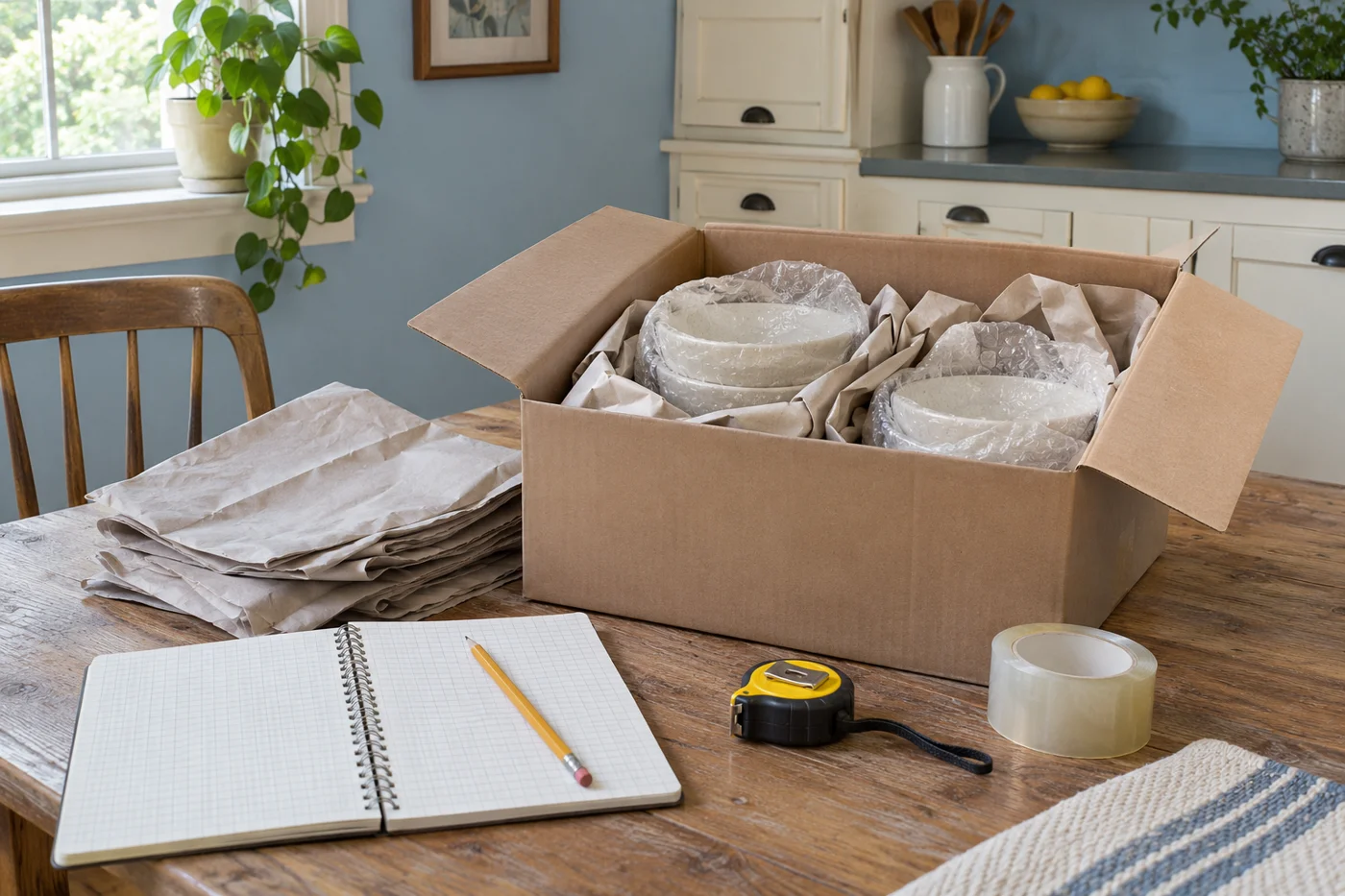
Label cartons with the room they should reach and a brief contents description. Use more than one visible side and keep sensitive personal information off the exterior. Pack heavy contents in manageable containers and protect fragile items appropriately. Keep furniture hardware labeled and associated with the correct piece through a secure method. If someone else packs or helps load, explain the room names and items that stay behind. Clear labels reduce repeated carrying and make it easier for helpers to place belongings without opening every carton.
Prepare a personal essentials group for the first days. Include medication, identification, keys, chargers, clothing, important documents, and the supplies needed for sleeping and basic meals. Carry critical items yourself where practical. A carton marked open first may be inaccessible inside a loaded vehicle. Keep personal bags in a distinct location and tell the crew not to load them accidentally. The first apartment should become usable even while most cartons remain closed, so plan around actual daily functions rather than trying to unpack every category at once.
Agree on shared household responsibilities
If you will live with roommates, discuss practical responsibilities before moving day. Confirm who brings shared furniture, how common spaces will be arranged, and which supplies are already available. Record agreed cost sharing and account responsibilities in a form the household can use, while keeping each person's private financial information secure. Avoid assuming that an existing friendship answers questions about ownership, replacement, cleaning, or access. Clear expectations reduce the chance that two people buy the same item or neither arranges an essential service.
Coordinate arrival times and use of shared spaces during unloading. Keep one person's belongings from blocking another's room or the only exit. Agree on temporary placement for items awaiting assembly. If furniture belongs to one roommate, identify that ownership in the household record rather than treating every common room item as jointly owned by default. Discuss disagreements directly and refer to the relevant agreement or appropriate advice when needed. A practical move plan gives each person a role and respects the fact that sharing an apartment does not make every decision or possession automatically shared.
Buy the first essentials deliberately
Use a short initial list based on what is missing from your inventory. Confirm bed dimensions before buying linens, check the kitchen's actual equipment before purchasing accessories, and measure storage before buying organizers. A first apartment does not need to reproduce another household's setup immediately. Let ordinary use reveal which additional items would help. Keep deliveries within confirmed access times and understand the provider's placement and assembly scope. A package delivered to the building entrance may still require a separate plan to reach the apartment.
Inspect purchases and retain receipts according to your needs and the seller's terms. Avoid unpacking every optional item while essential furniture remains unfinished. Keep tools, small parts, and packaging controlled around children or pets where relevant. For appliances or equipment requiring installation, use the appropriate instructions and qualified help. The aim is a safe, functioning home built in manageable stages. Choosing deliberately after measuring and checking the existing inventory can reduce unnecessary spending and the burden of moving unsuitable items out again shortly after arrival.
Check delivery and complete the handover
Compare incoming belongings with the inventory and direct large furniture to the planned locations. Record visible concerns through the provider's process and keep copies of relevant paperwork. Confirm that agreed assembly and placement are complete and exits remain clear. If an item is missing, damaged, or not ready for use, identify the appropriate contact and next action. Inspect fragile goods before discarding their packaging. A delivery is easier to review when the household has a clear record and someone available to answer questions without managing several unrelated appointments at once.
Finish responsibilities at the previous property or household through the agreed process. Return borrowed equipment, keys, or access devices where appropriate and confirm any remaining collection arrangements. At the apartment, prioritize sleeping, washing, food, work or study, and safe movement. Keep unresolved service questions separate from ordinary unpacking. Save the agreements, receipts, condition records, and useful messages together. The first move is complete when the home functions and remaining tasks have clear owners, even if decorative decisions and less urgent storage projects continue over the following days.
Test the plan with a small apartment
Imagine a first apartment reached by two flights of stairs, with a narrow hall and a delivery window set by the building. The household has accepted a sofa from a relative and plans to rent a vehicle. Before collection, it should measure the sofa and route, confirm the building instructions, and decide who can handle the furniture appropriately. This hypothetical example does not establish a suitable vehicle or lifting method. It shows why an inexpensive furnishing can still require access, transport, and handling decisions before it becomes useful in the new home.
The household also needs keys, a sleeping arrangement, and the supplies for the first evening. If the sofa does not fit, the rest of the move should remain workable. Keep optional furniture decisions separate from essential access and household needs. Apply the example to your own plan by identifying what must be confirmed before the next task begins. A measurement, booking, or clear responsibility is more useful than assuming that a problem will be solved by whoever happens to be present when the item arrives.
Review the first week
After the initial move, review what works and what still needs attention. Check service confirmations, account changes, delivery records, and any property issue reported at handover. Keep unresolved questions assigned to a contact and next action. Review the budget using actual receipts, separating planned costs from unexpected purchases. This is an opportunity to understand the apartment's needs before buying more, rather than treating every empty corner as a problem that requires immediate furniture. Let the household's ordinary routines guide the next decisions.
Create a suitable place for keys, important documents, manuals, and spare parts. Keep emergency and property contacts accessible through the appropriate records. Remove packing materials from exits and shared areas according to building instructions. Finish returning borrowed items and thanking helpers through your own arrangements. If something remains uncertain, ask the responsible provider or property contact directly. A deliberate first week turns a completed delivery into a usable home, with clear records and practical habits that support the next stage of settling in. It also prevents small unfinished tasks from becoming a confusing collection of bills, messages, and misplaced belongings several weeks later.
Keep the current task list short, prioritize dependencies, and close each item only when its required action is complete.