Check a truck cargo space
Compare your packed inventory volume with a specific rental truck’s published interior dimensions.
Rectangular volume is only a rough check. Wheel wells, tie-downs, furniture shapes and loading space reduce capacity. Check payload, ramp limits, door clearance and the rental company’s specifications.
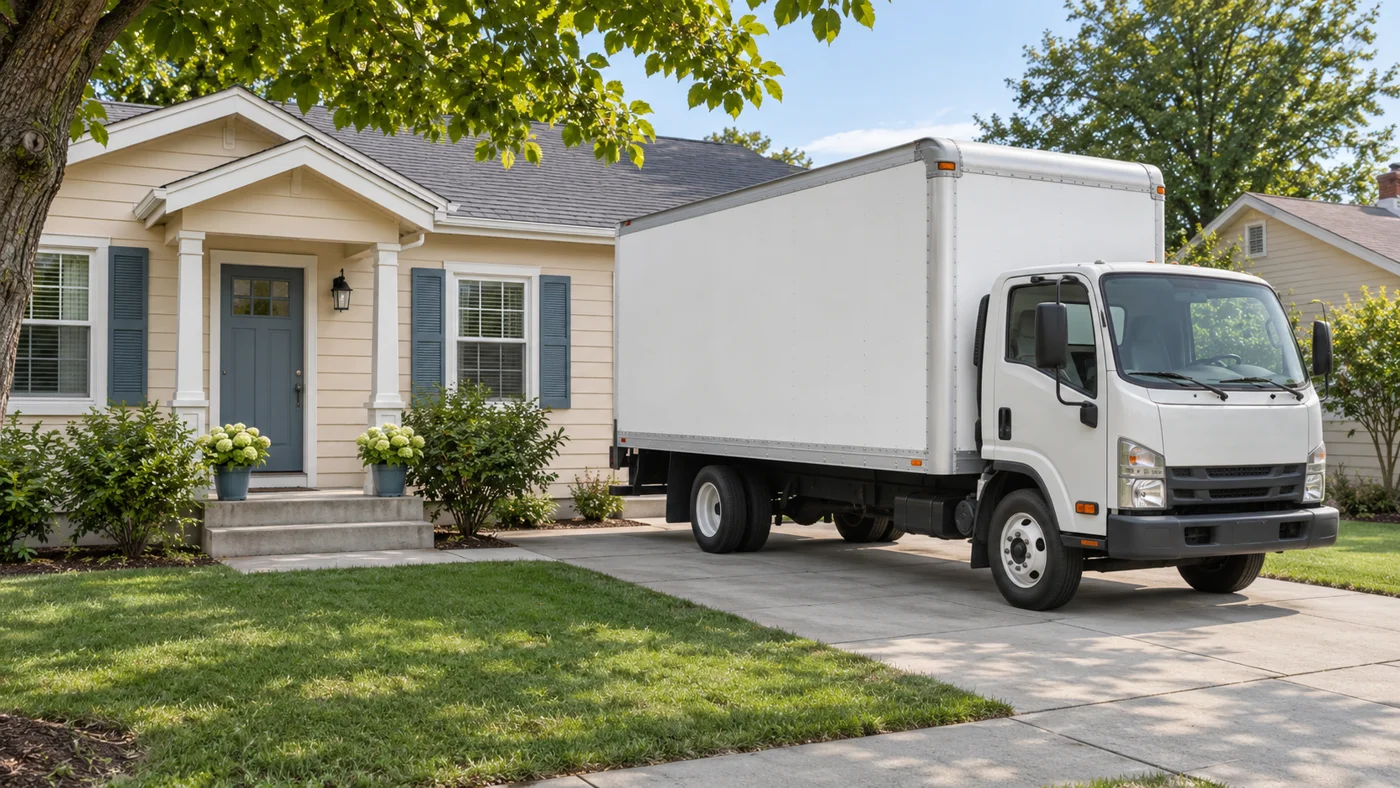
Use volume as a first check
A truck size estimator helps you compare a rough inventory volume with the space inside a specific vehicle. It does not select a rental model for you or guarantee that a load will fit. Furniture shapes, door openings, weight limits, and the way items can be secured all affect the result. Use the calculation to identify questions before booking, then check those questions against the rental company's specifications and the actual belongings you intend to move.
Start with a truck you are genuinely considering. Find its published usable cargo dimensions and confirm which model the figures describe. A marketing label based on length may not tell you the interior width, height, or door opening. Vehicles within a rental category can also differ. Ask the provider what is confirmed and what may be substituted, especially if a particular item fits only under a narrow set of assumptions.
The tool is most useful when you already have a reasonable inventory. If the input omits a garage, spare room, or storage unit, an apparently comfortable result can be misleading. Build the list first, then use the calculator to test the space rather than letting a convenient truck size determine what you remember to count.
Understand the calculator inputs
Enter the estimated packed inventory volume in cubic feet. Then enter the truck's usable cargo length, width, and height in feet. The final input is the percentage of that rectangular space you intend to treat as usable for planning. The calculator multiplies the three dimensions and applies that percentage. It compares the resulting planning allowance with the inventory volume you supplied.
The percentage recognizes that real loads do not occupy every inch of a perfect rectangle. Wheel wells, equipment, irregular furniture, protective materials, and the need to secure items can reduce practical capacity. The calculator does not know the layout of a particular truck or the shapes of your belongings. Choose an assumption you can explain and check it with the provider or loading professional when the result is close.
Use consistent units. Feet belong in the dimension fields, while cubic feet belong in the inventory field. If a measurement is supplied in inches, convert it before entering it. Mixing units can produce a result that looks precise but has no useful relationship to the vehicle. Recheck inputs that produce an unexpectedly large or small allowance.
Read the result without overinterpreting it
The tool reports a planning cargo capacity and indicates whether the volume you entered is within that allowance. If your entered volume exceeds it, the tool reports the approximate difference. That is a reason to review the inventory, truck, or assumptions. It is not a recommendation to compress fragile belongings, overload the vehicle, or eliminate space needed for safe loading.
A result within the allowance means only that one volume number is no larger than another under the chosen assumptions. It does not verify payload, door clearance, loading equipment, or the ability to stack the shipment. A long tabletop could create a fit problem even when the total volume is modest. Dense boxes could create a weight problem while much of the cargo area remains empty.
Avoid treating a small margin as a guarantee. Measurements and packing estimates have uncertainty, and unusual pieces can use space inefficiently. Review the largest items individually and ask the provider about the actual vehicle. A calculator can help you organize that discussion, but it cannot inspect the truck or judge a loading arrangement.
Work through a hypothetical example
Suppose a vehicle has usable interior dimensions of fourteen feet long, seven feet wide, and seven feet high. Multiplying those figures gives a rectangular volume of 686 cubic feet. If you use an eighty percent planning allowance, the result is 548.8 cubic feet before the display rounds it. These are hypothetical inputs for explaining the formula, not specifications or a recommendation for a particular rental truck.
If your packed inventory estimate is 450 cubic feet, it is below that planning allowance. You would still need to check the items' shapes, the permitted load, and the opening through which everything must pass. If the inventory estimate is 600 cubic feet, it exceeds the allowance. Review whether the inventory is accurate and whether a different vehicle or transport plan is needed rather than simply raising the percentage until the result looks acceptable.
Change one input at a time when comparing options. This lets you see whether the difference comes from actual vehicle dimensions or from a more optimistic packing assumption. Keep the assumption visible when discussing the result with another household member or a provider.
Build a volume estimate from real belongings
List furniture room by room and measure pieces that occupy substantial space. For a rectangular item, multiplying its outside length, width, and height gives a rough volume. Use consistent units and include the packed shape when packaging changes the dimensions. This is a planning method, not a precise model of how every piece will sit in a truck. Irregular objects need additional thought about orientation and the empty space around them.
Count boxes by their actual size rather than assuming every carton is identical. If you have not packed yet, estimate the number by room and revise it as packing progresses. Dense collections can require more small boxes than you expect. Keep a separate note for items whose packaging or disassembly is undecided, because those decisions may change the load's shape and volume.
Do not count empty space inside furniture as automatically available for other goods. Whether drawers or cabinets can remain filled depends on the item, handling method, and provider's instructions. Ask before relying on that space. A load estimate should describe how items will actually be prepared, not the most space efficient arrangement you can imagine.
Measure long and awkward pieces separately
Identify the longest, tallest, widest, and most awkward items before looking at the total. A sofa, wardrobe, dining tabletop, or exercise machine can determine whether the vehicle is suitable. Measure the packed dimensions and note which parts can be removed safely. Keep manufacturer instructions where relevant. Do not assume that an item can be dismantled merely because it appears to have screws or joined panels.
Compare those dimensions with the door opening and the route into the cargo area. The interior height is not necessarily the opening height. A piece may need to tilt, and tilting requires room outside and inside the vehicle. Also check the route through the home, because a truck with enough space cannot solve a narrow stair landing or a doorway that the item cannot pass.
Discuss difficult pieces with the rental provider or a qualified loading service. Explain the measurements and access conditions rather than asking only whether the truck fits a three bedroom home. Specific information produces a more useful answer and makes it easier to identify whether specialist handling is required.

Keep weight separate from volume
Volume describes space, while payload describes permitted weight. They are related only through the contents you load. A truck full of lightweight bedding differs from the same volume of books, tools, or equipment. Check the vehicle's published limits and the rental company's instructions. Do not assume that staying below the estimated cubic capacity means you are below the weight limit.
Consider the heaviest parts of the inventory. Books, workshop equipment, appliances, stone surfaces, and other dense items deserve particular attention. Obtain reliable weight information where available and ask for help when you cannot assess the load safely. The calculator does not weigh your belongings or account for every condition that affects the vehicle's permitted load. Never use its space result as permission to exceed a stated limit.
Loading equipment has limits too. Ramps, dollies, and lifting devices may have restrictions that matter even when the vehicle can carry the total weight. Follow the relevant instructions and use trained help for heavy or unusual items. A larger truck does not automatically make a difficult lift safe.
Allow for protection and securing the load
Furniture blankets, cushioning, cartons, and protective covers occupy space. So do the gaps created by items that should not press against each other. Account for the way fragile and finished surfaces must be protected. A volume calculation based on bare dimensions can understate the packed shipment, particularly when large delicate items need substantial packaging or a specific orientation.
The load also needs a safe securing arrangement. Follow the provider's guidance on attachment points, restraints, and weight distribution. Do not fill every space simply because the calculator shows spare volume. A piece that can slide, tip, or damage another item during normal driving needs a different arrangement. Ask the loading professional to explain how the final load is secured before the vehicle leaves.
Keep the planning percentage realistic for the shipment. Increasing it to force a favorable answer does not create usable room. If your load includes many irregular or fragile pieces, the practical arrangement may use space less efficiently than a load of uniform cartons. That difference should influence the vehicle choice and the discussion with the people doing the loading.
Check access before choosing a larger truck
A larger vehicle may provide more space, but it also changes the route and parking requirements. Check both addresses, including driveway width, turns, overhead clearances, and the place where loading will occur. Ask about building rules and permitted loading times. If the vehicle cannot reach a practical stopping point, additional carrying or another arrangement may be required.
Consider the driver's comfort and the rental requirements as well. The person driving must be able to operate the actual vehicle safely and understand its dimensions. A capacity problem should not be solved by handing an unsuitable vehicle to an unprepared driver. Discuss options with the provider, including whether another size, a different loading arrangement, or professional transportation better fits the move.
Review the journey for vehicle restrictions and suitable stops. A route chosen for a passenger car may not fit a moving truck. Confirm the relevant information rather than assuming that a familiar road is suitable. Choose a vehicle that fits your shipment and the practical conditions of the trip, including access, driving requirements, and the available loading arrangements.
Compare one trip with more than one
For a nearby move, several trips can be an option, but calculate the whole cycle. Each trip includes loading, securing, driving, unloading, and returning. Helpers, parking, elevator access, and rental time may not remain available indefinitely. The second trip can also contain the awkward items left behind, making it more demanding than a quick collection of spare boxes.
Estimate the additional mileage, fuel, labor, and time before choosing a smaller vehicle. Compare that total with the larger option and with the limits of your schedule. If the move crosses a long distance, another trip may be impractical. Do not rely on it as an unpriced backup when the first load is already near the vehicle's limits.
Decide what happens if the shipment does not fit. You might reduce belongings before moving day, reserve a different vehicle, or arrange another transport method. Choose the fallback while alternatives are available. Discovering the problem after loading has begun can leave you with a partly moved household and no clear way to finish.
Recheck the estimate after packing
Your early inventory is a forecast. Once boxes are packed and furniture decisions are final, update the figures. Count the actual cartons and remove items that have left the household. Add anything that remains after a planned sale or donation failed. Review packaging for fragile pieces and confirm which furniture will be disassembled. These changes can materially affect the load even when the number of rooms has not changed.
Compare the updated result with the specific truck reservation. If the provider changes the vehicle, check the new dimensions and limits instead of assuming the replacement is equivalent in every relevant way. Keep the inventory and vehicle information together so you can explain a concern clearly. Ask questions before pickup when possible, especially if the plan depends on a particular clearance or feature.
Treat the result as one part of the final review. Confirm space, weight, access, equipment, driver readiness, and the time available for loading and return. A usable estimate is one that helps you make those checks and choose a workable arrangement. It should leave you with fewer unanswered questions before the move, not a false promise that every item will fit.
Keep measurements traceable
Write down where each vehicle dimension came from and when you checked it. A general advertisement, a model specification, and a confirmed vehicle assignment provide different kinds of information. Ask the branch to clarify a dimension when the distinction matters. If your tallest item is close to the stated opening height, do not round the measurement in a favorable direction. Measure again and discuss the actual handling route with the people responsible for loading.
Record whether furniture dimensions include wrapping, handles, feet, or other protruding parts. A removable leg may change the measurement, but only if you will actually remove it and can do so safely. Keep a photograph with the measurement for unusual pieces. This makes it easier for a provider to understand the issue and reduces the risk that two people are discussing different versions of the same item.
Use the same measurement convention throughout the inventory. Switching between bare furniture dimensions and packed dimensions without noting the difference creates avoidable uncertainty. You do not need engineering precision for every soft bag, but the items that determine fit deserve careful measurement and clear notes.
Use the estimate to ask better questions
Bring the inventory and calculator assumptions to the rental discussion. Ask whether the quoted dimensions describe the usable interior, whether wheel wells or equipment reduce the space, and what opening measurements apply. Ask about the stated payload and the requirements for any ramp or towing equipment you intend to use. These questions are more useful than asking the representative to approve an unexplained total from a calculator.
If you hire loaders, share the same information with them. Tell them which pieces are fragile, which must remain upright, and which can be disassembled. Ask what supplies and restraints they expect you to provide. A professional may identify a packing or sequencing issue that a simple volume estimate cannot show. Resolve that issue before the crew arrives rather than treating the calculated allowance as the final authority.
Keep the final choice connected to the whole move. A suitable vehicle must carry the load within its limits, fit the access route, and work with the driver's abilities and reservation period. When those conditions are confirmed, the estimate has served its purpose. It has helped turn an uncertain shipment into a set of specific checks that you and the provider can review together. Keep a copy of the confirmed specifications with your reservation so you can compare the actual vehicle at pickup and raise a mismatch before accepting it for the move.