
Sort before opening the paper
Start by deciding which dishes and glasses will move. Empty one cupboard at a time and group items by material, shape, and how they will be used after arrival. Set aside damaged pieces that should be discarded appropriately and items you intend to give away. Keep the small everyday set needed before moving day separate. This prevents repeated unpacking when the household still needs a plate or drinking glass. Count the remaining groups so you can choose suitable cartons and estimate the packing work.
Identify valuable, antique, unusually thin, or otherwise delicate pieces before treating everything alike. Ask the mover or an appropriate specialist about preparation for items whose materials or construction need particular care. Original packaging may be useful if it remains sound and was designed to protect the specific piece. Do not assume an attractive gift box provides transport protection. The plan should reflect the object's vulnerability, the journey, and the provider's requirements, especially when the shipment includes storage or several handling stages.
Prepare a stable packing area
Use a clean, stable work surface with room for the item, protective material, and an open carton. Keep the surface dry and remove objects that could scratch or strike fragile pieces. Place packing supplies within reach so you do not carry an unprotected glass across a cluttered room to find tape. Keep cutting tools controlled and small materials away from children and pets. Work with manageable groups rather than spreading the entire kitchen across the floor and losing the clear route through the room.
Prepare a separate location for completed cartons where they can remain stable and dry. Do not stack them in an exit or where someone must repeatedly step around them. Keep a visible area for items that still need a decision or specialist advice. A simple process helps: inspect, protect, place, fill gaps, check, close, and label. The sequence should leave enough time to assess each carton before sealing it. Rushing through the final steps can hide unsupported items or empty spaces that allow contents to shift during handling.
Choose cartons for the contents
Use sound cartons suited to fragile household goods and follow the mover's packing requirements. Check the base, corners, and sides for damage, moisture, or weakness. Reinforce and close the carton according to its design and the material instructions. Avoid choosing the largest box simply to reduce the number of cartons. Dishes can become heavy quickly, and a box that is difficult to handle safely is a poor result even if every piece fits inside. Keep the packed weight manageable for the planned handling.
Consider appropriate dividers or purpose designed packaging for glasses and other vulnerable shapes. Check that the compartments fit the protected pieces rather than forcing items into spaces that are too small. A divider separates objects but does not remove the need for suitable cushioning. Ask the provider about materials when uncertain, particularly for expensive or delicate sets. Do not use a weak carton because a label will say fragile. The carton, internal protection, and load arrangement need to work together before the label can communicate the intended care.
Inspect and dry each piece
Pack clean, fully dry dishes and glasses. Moisture trapped inside wrapping or a closed carton can create problems during storage and make unpacking unpleasant. Check for cracks, chips, loose handles, or other weaknesses while the pieces are visible. Record existing damage where useful, especially for valuable items. Do not hide a cracked piece among sound ones without deciding whether it should be moved. If it is retained for sentimental or other reasons, identify it in your private inventory and protect it according to its actual condition.
Remove loose lids and accessories where appropriate and keep their relationship clear. A serving dish and its lid may need separate protection even though they belong together. Avoid placing loose pieces inside one another without separation. Consider how the item will be handled after arrival as well as during packing. If a damaged edge or fragile component could surprise the person opening the carton, include a clear internal note. Keep detailed value information off the outside of the box while retaining a useful record with the household's move documents.
Protect dishes individually
Separate dishes with suitable protective material so hard surfaces do not press or rub directly against one another. Follow the mover's instructions for the packing method and carton arrangement. Make sure rims and vulnerable edges receive attention. A stack wrapped only around the outside can still leave contact between the pieces inside. Work in small groups that you can control without dropping or sliding them. If the shape or finish needs specialist care, pause and obtain advice instead of applying the same method used for ordinary everyday plates.
Place protected items in the carton using a stable arrangement approved for the contents. Do not force a dish into a gap or press down to make the lid close. Keep the load balanced and avoid concentrating heavy pieces above delicate ones. Add suitable material where needed to limit movement without applying damaging pressure. The goal is controlled support, not the maximum possible number of dishes per carton. A second manageable box is often easier to handle and inspect than one overloaded carton whose contents are compressed together.
Give glasses their own space
Protect each glass separately and keep hard surfaces from contacting neighboring pieces. Pay attention to rims, bases, handles, and narrow stems where present. Use appropriate compartments or separation that suits the shape and packed size. Do not place glasses loosely inside other glasses to save room. A close fit between unprotected pieces can create pressure and make removal difficult. If you use original inserts, check that they are intact and still hold the specific items securely after protective material has been added.
Arrange the carton so glasses remain supported during normal handling. Avoid mixing them casually with heavy cookware or objects that can shift into them. Protect empty spaces without wedging material so tightly that it stresses a thin rim or stem. Ask the mover about unusual glassware or a valuable collection. Household packing guidance should not replace a specialist plan when the item requires one. Keep a record of what is in each carton and label the destination clearly so the box can reach a safe unpacking area rather than being moved repeatedly between rooms.
Handle lids and serving pieces deliberately
Serving bowls, platters, pitchers, and covered dishes can have shapes that do not fit a simple stack. Measure or test the empty carton before beginning to wrap, allowing room for the protection the item needs. Protect handles, spouts, and projecting edges separately within the overall method. Keep a lid identified with its dish while preventing hard contact during transport. Do not rely on the lid remaining attached unless the packaging and provider's instructions support that arrangement. A loose lid can become another object moving inside the carton.
Choose a carton that supports the protected piece without forcing it against the sides. Large, flat items may need packaging different from ordinary plates. Ask the mover for an appropriate method if you are unsure. Avoid filling a remaining gap with an unrelated heavy object merely because it fits. The contents should be compatible in weight, fragility, and arrangement. Record special pieces in the inventory and photograph valuable items before packing. This creates a useful reference without requiring sensitive details or price information to appear on an external label.
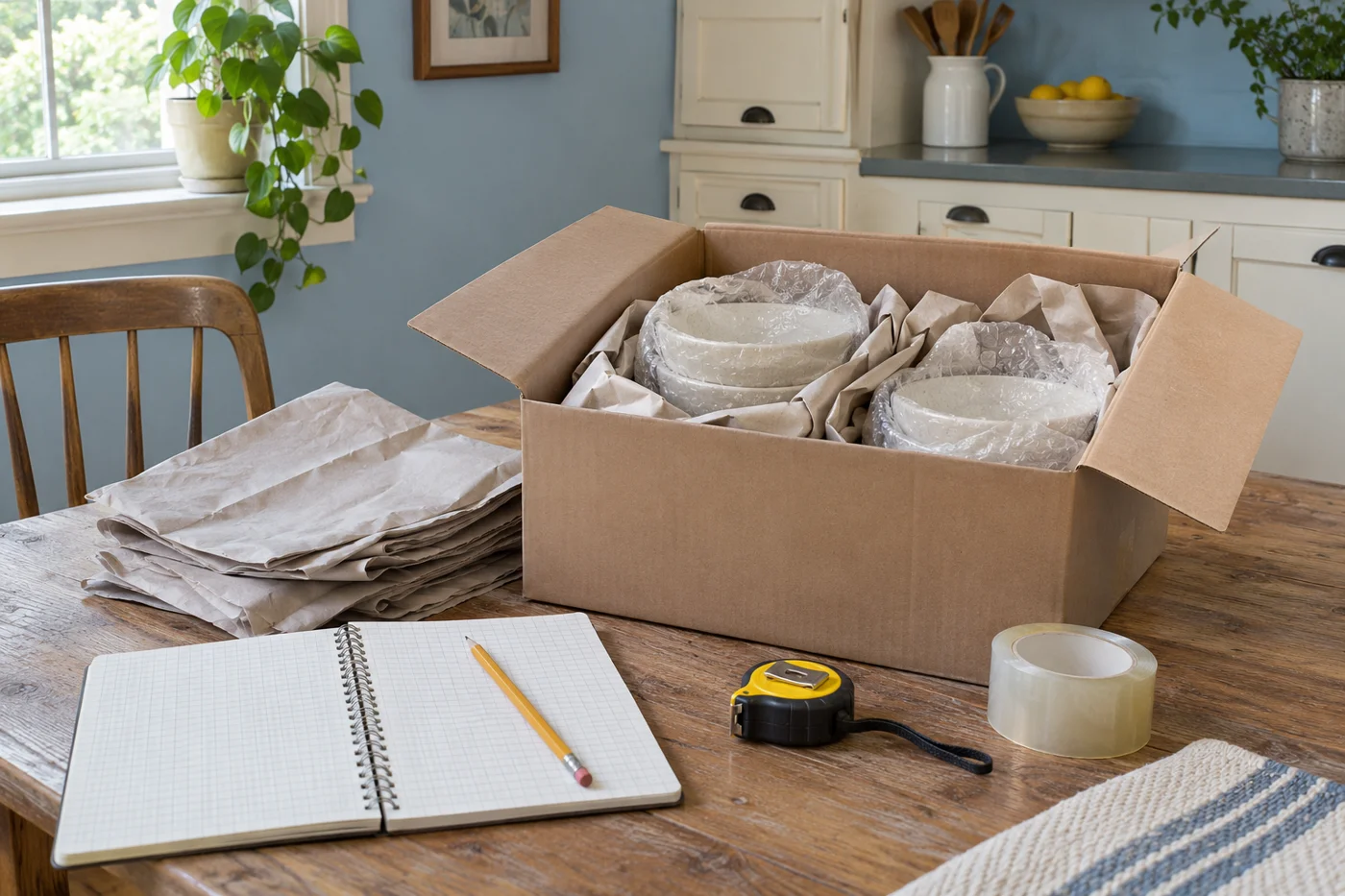
Fill gaps with a purpose
After placing the protected contents, inspect the carton for spaces that allow movement. Add suitable cushioning to support the arrangement without crushing delicate pieces. Different materials behave differently, so follow the provider's guidance and the packaging instructions. Avoid assuming that any soft household item is appropriate for contact with a delicate finish or shape. Towels or clothing may be useful in some ordinary situations, but their suitability should be considered rather than treated as a universal substitute for proper packing materials.
Check the carton gently before sealing. You should not need to shake it aggressively to decide whether the arrangement is secure. If pieces can move or strike one another, reopen the packing arrangement and correct it. Do not hide the problem under extra tape on the outside. Leave the top closure flat and supported according to the carton design, with no item pressing against it. A box that bulges or cannot close normally needs a different arrangement or another carton. Treat that signal as a reason to adjust the packing while the contents are still accessible.
Keep the weight manageable
Assess the carton as you pack rather than waiting until it is full. Dishes, mugs, and serving pieces can produce a heavy load even in a modest space. Use smaller groups when necessary and avoid combining several dense categories in one box. The goal is a carton that can be handled safely by the people and equipment involved. Do not assume that a reinforced box makes any weight appropriate. The provider's requirements and the carton's design should guide the limit, along with the practical handling plan.
If a carton becomes too heavy, remove and repack part of the contents properly. Check each new carton's internal arrangement whenever you transfer protected pieces from an overloaded box. Label each new carton and update the inventory. Keep the completed boxes in a stable location where they do not require repeated lifting before pickup. Tell the crew about any unusual item rather than relying on a vague heavy label to explain it. Good packing includes the ability to move and place the carton without awkward handling or an unexpected load.
Label for handling and unpacking
Put the destination room and a brief contents description on more than one side of the carton. Add an appropriate fragile handling note and a box number if you use an inventory. Labels should remain visible when cartons are grouped together. Avoid writing detailed values or sensitive information on the exterior. The crew needs to know where the box goes and how it should be treated, while the household can keep a fuller list separately. Clear labels also reduce unnecessary opening when several kitchen cartons look alike.
Mark the small first use kitchen group distinctly if it will be part of the shipment, and confirm whether it can actually be accessible at delivery. Carry essential eating and drinking supplies separately when they are needed before unloading. A label saying open first does not make a carton reachable in a packed vehicle. Tell helpers which bags or boxes must remain with the household. Keeping the first meal plan separate from the bulk kitchen packing prevents the household from searching through every fragile carton while tired and surrounded by unpacked belongings.
Coordinate with professional packing
If professionals pack some or all of the kitchen, ask what preparation you should complete before arrival. Identify items you will carry yourself and any pieces requiring special attention. Do not partially wrap a fragile collection in a way that prevents the packer from inspecting or preparing it properly. Discuss the arrangement with the provider and follow the agreed scope. Keep important condition records outside the packing area. If you pack ordinary dishes yourself but need specialist preparation for selected items, make that division clear in the estimate and schedule.
Ask how your packed cartons should be labeled and presented for pickup. Follow the provider's restrictions and tell it about concerns before loading. A mover may need to inspect or repack an unsuitable carton under its terms, so leave time to address questions. Do not assume that professional transportation makes inadequate packing safe. Packing responsibility, handling, and protection terms should be understood together. Keep the written arrangement with the inventory so the household knows which work was performed by each party and what remains to be checked at delivery.
Unpack on a clear surface
At the destination, place dish and glass cartons in a dry, stable area away from busy carrying routes. Open one at a time on a clear surface and remove protective material carefully. Check inside wrapping before discarding it so small lids or accessories are not thrown away. Inspect pieces as they emerge and compare notable items with the inventory or condition record. Keep children and pets away from loose packing materials and any damaged pieces. If something is broken, handle the area appropriately and avoid creating another hazard while examining the carton.
Document visible concerns and follow the provider's written reporting process where relevant. Retain packaging for items that need further review, along with photographs and the carton identification. Do not assume a conversation during unloading completes every reporting step. Once checked, put everyday dishes away before opening less urgent serving pieces. Keep the work area controlled and remove empty materials without blocking exits. A deliberate unpacking sequence protects the contents through the final stage, when the temptation to rush can be as strong as it was during the last evening of packing.
Test a mixed cupboard example
Imagine a cupboard containing everyday plates, thin wine glasses, a large serving bowl, and a lidded dish. Packing everything together because it came from one cupboard would ignore the differences in shape and vulnerability. Separate the groups, choose suitable cartons, and prepare each item appropriately. The glasses need protection from contact, the bowl needs room for its protected shape, and the lid needs a clear association with its dish. This example illustrates sorting; it does not prescribe one material or arrangement for every kind of china or glass.
Use the same reasoning with your own cupboard. Ask what can safely share a carton and what needs a different method. Keep the weight manageable and avoid using a valuable piece to fill a convenient gap. If the plan depends on squeezing or stacking incompatible objects, use another box. Update the inventory and labels so the extra carton remains part of the shipment record and can be found during unpacking.
Finish with a carton review
Before pickup, inspect completed kitchen cartons for damaged corners, moisture, bulging sides, weak closures, or missing labels. Correct problems while supplies and the packing area are still available. Keep the boxes stable and dry, and avoid placing heavy unrelated objects on top. Tell helpers which cartons contain fragile kitchen goods and which personal supplies must remain outside the shipment. A quick review should confirm the work already done, rather than become the first time anyone checks whether a box can be handled safely.
After the move, retain the inventory and relevant records until any concern is resolved. Reuse or recycle materials through appropriate arrangements once they are no longer needed for inspection. Keep useful specialty packaging for delicate items if you have suitable storage and expect to use it again. The objective is a kitchen that can be used safely, with the fragile contents checked and the remaining packing debris removed from everyday work areas.
Set aside time for that cleanup so empty cartons do not obstruct the household's routine.