
Sort the collection before buying boxes
Books become a demanding part of a move because a small space can hold a great deal of weight. Start by reviewing the collection before choosing containers. Separate the books you will take from those you plan to sell, donate, return, or recycle through an appropriate route. Check for borrowed books and library items so they do not disappear into the shipment. Keep a small reading selection aside for the days before and after the move.
Work shelf by shelf rather than pulling every book into one large pile. Decide what stays, then estimate the packing required for that section. This keeps the room usable and makes it easier to preserve an existing arrangement. If the collection has a deliberate order, photograph the shelves or record the sequence before packing. You can then decide whether to reproduce it at the destination without relying on memory.
Give special attention to books with personal records tucked inside. Check for documents, photographs, money, and notes you need to retain. Move those items to a separate secure place. A book going to another household should not carry private information simply because you forgot what had been used as a bookmark.
Separate ordinary books from sensitive items
Most everyday books can be packed with ordinary care, but not every item belongs in the same process. Fragile bindings, loose pages, unusual formats, signed copies, and valuable or irreplaceable books may need specialist advice. Identify them before the routine packing begins. Do not assume that a method suitable for a paperback is appropriate for a damaged volume or a collection with significant value.
Look for existing damage and record it where useful. Photographs of a binding, cover, or dust jacket can support your own condition record. Keep any appraisal or ownership documents separate from the shipment when appropriate. Ask the moving provider how it handles valuable items and what information it needs. Do not rely on an ordinary box label to communicate special handling or valuation arrangements.
If a book shows signs of moisture, pests, or another condition concern, avoid packing it tightly with clean books and hoping the move will solve the problem. Seek suitable advice about the item and keep the issue separate from routine packing. The aim is to avoid carrying a condition problem into a clean box or a new shelving area.
Handle a shared collection with clear ownership
If several people keep books in the same home, identify ownership before sorting or donating. A book that appears unused may belong to someone who expects to keep it. Ask each person to review their own shelves or mark the items they want moved. Set a practical decision date and keep unresolved books separate. This avoids packing disagreements at the moment a donation collection arrives or a moving crew begins loading.
For books going to different destinations, use distinct inventory groups and room labels. A student's boxes traveling to a dormitory should not be mixed with books going into long term storage. Record who will carry or receive each group and when the handoff occurs. If one person is absent during packing, share a concise list of the decisions that need their response rather than making assumptions about the whole collection.
Check borrowed books before the final boxes are closed. Return them through the appropriate arrangement or obtain clear instructions from the owner. Keep the return separate from the household shipment count. A small shelf of borrowed items can otherwise become a problem months later when nobody remembers which carton contains them or whether they were included at all. Clear ownership records prevent avoidable confusion after the move.
Choose boxes you can handle safely
Use sound boxes that suit dense contents. Smaller containers often make it easier to keep books manageable, but the appropriate size depends on the box, contents, and people handling it. Check the box's condition and any stated limits. A large carton filled with books can become difficult to carry even when it still has room. Do not treat empty space as an instruction to add more weight.
Inspect reused boxes for softened corners, damaged seams, moisture, or old labels that could confuse delivery. Reinforce and close boxes according to the material and packaging guidance you are using. Tape cannot restore a badly weakened carton. Replace a container that is unsuitable rather than asking the crew to handle it carefully enough to compensate for the failure risk.
Test the weight as you pack instead of waiting until the box is full. If it is becoming difficult to move, stop and redistribute the contents. Keep the floor clear so you can assess and handle the box without twisting around piles. Use appropriate equipment or help where needed, and do not assume that another person can safely lift a box you find unmanageable.
Prepare a clean packing area
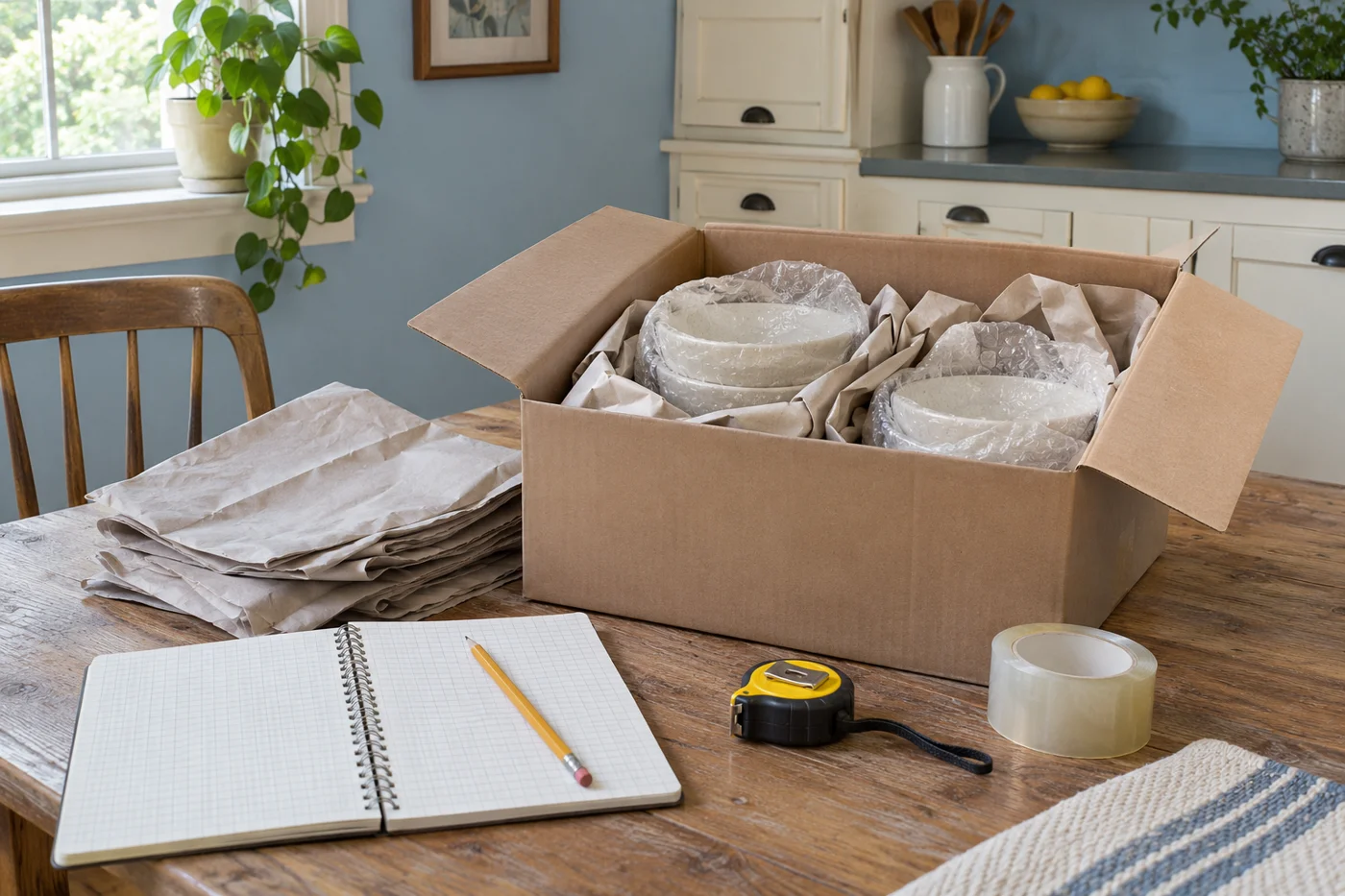
Choose a dry surface with enough room to inspect books and assemble boxes. Keep food, drinks, and cleaning products away from the work. Gather the boxes, suitable cushioning, tape, and labels before starting so you do not leave partly packed containers scattered around the room. A simple workstation helps you finish each box completely before beginning the next one.
Remove loose dust gently using an appropriate method for the book's condition. Avoid applying liquids or household cleaners to bindings and pages as part of routine moving preparation. If a book needs treatment beyond light surface care, get advice suited to that material. Packing should protect the collection for transport, not become an improvised restoration project under time pressure.
Check that books and packing materials are dry before enclosing them. Do not pack damp items and assume they will dry in the truck or storage unit. Keep containers away from wet floors and exterior walls where conditions are uncertain. A clean, dry start reduces avoidable problems during the period when the boxes are closed and difficult to inspect.
Arrange books without stressing bindings
Pack books in a stable arrangement that supports them and avoids forcing them into an unsuitable position. Similar sizes are easier to group because they create fewer uneven gaps. Do not bend covers or compress a volume to make the last book fit. If an item is too large for the container, choose another box or a suitable separate method rather than allowing it to protrude.
Avoid arrangements that leave heavy books pressing awkwardly on delicate bindings or projecting edges. Use appropriate cushioning to prevent movement and support the contents. The exact method can depend on the book format and condition, so treat unusually fragile or valuable volumes separately. Keep pressure off decorative elements, loose covers, and any part that could catch when the box is opened.
Check the arrangement before closing. The books should not shift freely when the container is handled normally, but the box should not bulge from excessive compression. Add suitable light cushioning where needed and redistribute books if the shape is unstable. A well packed container protects the contents through support and a manageable load, not through force.
Protect dust jackets and special formats
Dust jackets, slipcases, foldouts, and oversized covers need attention because they can catch, crease, or rub against nearby items. Group books with compatible dimensions and protect surfaces with suitable materials. Keep accessories with the correct volume when they can travel safely together. If an insert or companion piece needs separate packaging, record the relationship so you can reunite them after the move.
Oversized art books and albums may need a different container from ordinary shelves of paperbacks. Measure them before choosing packaging and avoid leaving corners exposed. A heavy oversized book should not become the top of an unstable pile. Consider how the box will be carried and stacked, and ask for appropriate handling help if the collection is difficult to package safely.
Do not use a valuable book as cushioning for another object or place unrelated hard items among the books to fill gaps. Small objects can create pressure points and become lost between volumes. Keep the shipment organized by materials that can be packed compatibly, and use purpose chosen cushioning rather than improvised objects that introduce new risks.
Keep the box order useful
Choose a numbering system that connects each box to a shelf, room, or section of the collection. You do not need a complete title catalog unless it serves a purpose, but a brief contents note can save time later. For example, a reference to the upper study shelves is more useful than labeling every carton books. Use descriptions that another household member will understand.
Put the destination room and box identifier on more than one side. Mark handling information clearly without advertising valuable contents. Keep sensitive or high value details in the private inventory rather than on the outside of a box. If books are going to several rooms or people, make that distinction before loading so the cartons are not all delivered to one crowded corner.
Record any box you need soon after arrival. Work references, school materials, or a child's familiar bedtime books may deserve an accessible location. Consider carrying a small essential selection separately if the shipment may be delayed. Avoid making the whole collection urgent when only a few volumes need to be available immediately.
Close and stage boxes carefully
Finish each carton with a secure closure suitable for its construction and contents. Check that the base, sides, and lid remain sound and that the label is readable. If a box changes shape when you move it, review the load and packaging before setting it aside. Do not hide an overfilled or damaged box at the back of the room and expect the loading crew to solve it later.
Stage finished boxes on a dry, stable surface away from exits and the carrying path. Stack only in a way that suits the boxes and contents, keeping the arrangement stable. Dense cartons can damage lighter containers beneath them. Avoid tall piles that are difficult to inspect or reach safely. If space is limited, plan smaller packing sessions and a clear staging area rather than creating a maze around the furniture.
Keep the books separate from liquids and goods that could leak or transfer odors. Tell everyone packing where completed boxes belong and which ones remain open for a final check. Consistent staging makes it easier to count the cartons and prevents a helper from mistaking a partly packed box for one ready to load.
Tell the mover about dense collections
A substantial book collection affects the shipment differently from the same number of boxes filled with bedding. Tell the provider what the boxes contain and keep the inventory accurate. If the collection was omitted from an earlier survey, update the provider before loading day. Do not assume that a small room means a small load when its shelves are densely filled.
For a rental truck, check the vehicle's load limits as well as its space. Volume calculations do not establish whether the weight is suitable. Follow the provider's guidance for weight distribution and securing the load. Do not cluster heavy cartons in a way that ignores those instructions. If you cannot assess the load, ask an appropriate professional rather than relying on an empty looking cargo area.
At both addresses, make the carrying route clear. Books may involve many repeated trips, and stairs or long walks can add substantial work. Give helpers manageable cartons and appropriate equipment, and allow time for safe handling. Rushing dense boxes near the end of a reservation can create problems that earlier packing and access planning could have reduced.
Plan for storage before sealing everything
If books will spend time in storage, ask about the conditions and access arrangement before choosing the facility or service. Consider moisture, temperature management, pests, and the ability to inspect belongings. Do not assume that every storage arrangement provides the same environment. Describe any sensitive collection to the provider and seek specialist advice where the items warrant it.
Keep cartons off surfaces where they could be exposed to moisture and arrange the storage space so boxes can remain stable and protected. Follow the facility's rules and suitable guidance for the materials. Avoid placing books beneath items that can leak or crush the packaging. Record where the collection is located so retrieval does not require opening every box in the unit.
Decide what you may need during the storage period. A small working selection kept with you can prevent an urgent search through an inaccessible shipment. If access is available only by appointment or through a provider, understand that process and any associated charges. The packing plan should reflect the actual storage arrangement rather than assuming you can retrieve a book whenever you wish.
Prepare shelves before unpacking
At the new home, make sure shelving is ready before opening every carton. Check that the furniture is assembled, stable, and suitable for the intended load. Follow the manufacturer's instructions and appropriate installation guidance. Do not place a heavy collection onto a unit that is only partly assembled or has unresolved damage from the move. Resolve the support question before arranging the books.
Clean and dry the shelves using methods suitable for their materials. Consider the location and avoid placing the collection where obvious moisture or other conditions could harm it. If the room is still being painted, repaired, or cleaned, keep books protected until the work is complete. Unpacking into an unfinished area can create extra handling and expose the collection unnecessarily.
Use your box notes and shelf photographs to choose an order. Start with the sections you need most and leave room to adjust the arrangement. You may discover that the new space works better with a different organization. The records give you a reference without forcing you to recreate every detail of the previous home.
Check the collection as you unpack
Open cartons carefully so a blade or other tool does not contact the books. Remove cushioning and inspect the contents as you place them on shelves. Look for visible changes in condition, missing volumes from a recorded group, or moisture affecting the packaging. Keep relevant photographs and packing materials while you clarify a problem through the provider's process. Avoid discarding the evidence before you understand what information is needed.
Update the inventory when each box is empty and check that inserts, accessories, and companion volumes have been reunited. Small loose items can remain in cushioning or at the bottom of a carton. Flatten or recycle packaging only after the check is complete and according to the available local process. Keeping empty boxes mixed with full ones makes it harder to know what remains.
Once the collection is settled, keep the useful records and remove temporary labels from your active task list. Note which box sizes and arrangements worked for your books. The next move will still need fresh decisions, but a clear record of the collection and its handling needs can make preparation more accurate and reduce repeated sorting.