
Check the home before the truck arrives
A new home should be ready to receive people and belongings before the shipment reaches the door. If you can visit in advance, use the time to check access, essential services, carrying routes, and the places where large furniture will go. Do not use the visit only to admire the empty rooms. A practical check can identify a problem while you still have time to contact the responsible person or change the delivery arrangement.
Separate what you can observe from what needs qualified inspection or repair. You can notice that a door will not open, a room contains standing water, or an expected service is unavailable. That does not mean you should attempt to fix the underlying issue yourself. Contact the landlord, seller, property manager, utility provider, or appropriate professional according to the situation and your responsibility for the home.
Record issues clearly with dates, descriptions, and photographs where useful. Keep the record with the property handover documents. The arrival check should help you decide whether the home can receive the shipment and what action is needed. It is not a substitute for a formal property inspection or the terms of your purchase or lease.
Confirm legal access and the handover
Verify that you are entitled to enter and use the property at the planned time. A scheduled move does not replace a completed key or possession handover. Check the arrangement with the appropriate property contact and keep the confirmation accessible. If possession is delayed, tell the moving provider promptly and discuss the options before the truck is already waiting outside.
Test the keys, access cards, or approved entry method you have received. Confirm the correct entrance, unit number, and any gate or building process. Do not assume that one working front door key provides access to a loading area, lift, or parking space. Those may have separate arrangements and contacts. Record who can help if access fails during the delivery window.
Follow the property's process for security changes and account access. If you are renting, obtain permission where required before changing locks or building systems. Keep codes and sensitive access details out of broadly shared moving notes. Give the delivery team the practical instructions it needs through an appropriate channel rather than exposing permanent credentials unnecessarily.
Verify the delivery route outside
Check where the truck can legally and practically stop. Look at the driveway, loading area, gate, overhead clearance, and the route from the vehicle to the entrance. Conditions may differ from the last visit, especially after weather or nearby work. Tell the provider about changes that affect access, carrying distance, or vehicle size. A clear route should be confirmed rather than assumed from an online map.
Move your own vehicles and agreed obstacles out of the loading area before arrival. Do not move someone else's property or create an unauthorized reservation in a public space. If a permit or building approval is required, use the relevant process and keep the confirmation. Ask the property contact how the arrangement will remain available throughout unloading.
Consider the driver's departure as well as arrival. A vehicle needs a safe way to leave after unloading, and the space may be affected by other deliveries or parking. Give accurate final approach instructions and identify the correct entrance. If you plan to meet the driver nearby, choose an appropriate agreed location rather than an improvised roadside stop.
Check indoor carrying routes
Walk from the entry to the rooms receiving furniture. Inspect door openings, hallways, turns, stairs, and lifts for obstacles or restrictions. Compare difficult pieces with the route measurements you collected earlier. An empty room may be large enough for a sofa while the route into it remains unsuitable. Raise that question before unloading rather than asking the crew to solve it with the item in hand.
Clear loose objects and arrange any agreed protection without creating unstable or slippery surfaces. Keep exits and essential access open. Tell the provider about fragile fixtures or surfaces that need attention. If building rules require a particular protective method, confirm that the relevant materials and permission are in place.
For a shared building, verify the elevator reservation and the approved loading entrance. Ask whom to contact if the lift is unavailable. Do not assume that the crew can use another resident's window or a passenger route that has not been approved. The indoor path is part of the delivery arrangement and can affect both timing and handling.
Confirm essential services are available
Check that the services you arranged are operating as expected, using ordinary safe observations and the providers' instructions. Electricity, water, heating or cooling where needed, and communications may affect the household's ability to use the home. If a service is unavailable, contact the appropriate provider and record the next step. Do not treat an activation request as confirmation that everything works at the property.
Look for obvious problems that need attention, such as visible leaks or an unusual condition around equipment. Avoid touching damaged electrical components, attempting unfamiliar repairs, or overriding equipment safeguards. Use the appropriate professional or emergency channel when the situation requires it. The purpose of the check is to identify an issue and route it correctly, not to perform a technical inspection without the necessary knowledge.
If an essential service cannot be ready before delivery, decide how that affects the plan. The shipment may need a revised arrival or the household may need temporary accommodation. Discuss the facts with the responsible provider and property contact. Avoid unloading sensitive belongings into an unsuitable environment simply because changing the schedule is inconvenient.
Record the property's condition before filling it
Take useful photographs or notes of the areas relevant to your handover, following the property agreement. Empty rooms make existing marks and issues easier to see. Include enough context to identify the location, and retain the original records in an organized place. A close photograph without a room reference can be difficult to interpret later when several similar surfaces are involved.
Report concerns through the appropriate process rather than assuming photographs alone notify anyone. Keep the message and response with the condition record. Distinguish existing issues from damage observed during delivery. Clear timing and descriptions help the relevant parties understand what you saw without requiring unsupported conclusions about responsibility.
Do not let documentation block safe unloading. Complete the main condition check before the crew arrives when possible, then stay available during delivery. If a new concern appears, record it at a suitable point and follow the provider's process. Avoid standing in the carrying path while trying to photograph an item or surface.
Prepare rooms for large furniture
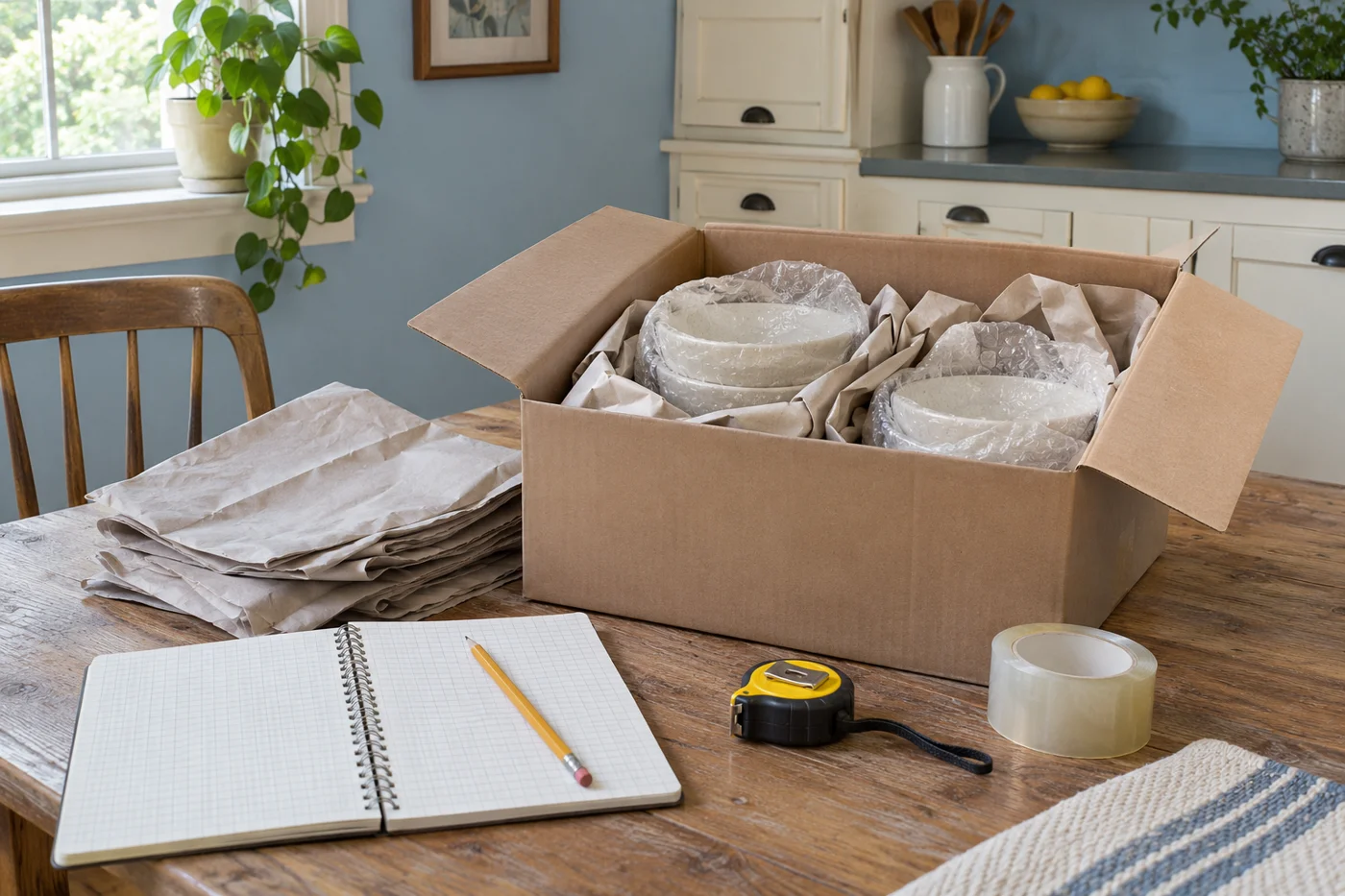
Decide where the largest pieces belong before unloading begins. Measure the intended spaces and account for doors, walkways, vents, and normal operation of the furniture. A recliner or sleeper needs room for use beyond its closed dimensions. Keep the relevant product instructions available where they affect placement or assembly. Do not plan only around how the room looks in an empty state.
Use simple room labels that match the box labels. If the home has several similar bedrooms, distinguish them clearly. A floor sketch can help explain furniture orientation without requiring you to stand in every doorway. Give the receiving contact enough information to answer ordinary placement questions when you are occupied elsewhere.
Leave a suitable area for furniture assembly and hardware. Keep small components identified with the correct piece. If professional assembly is part of the service, confirm the scope before delivery. If it is not included, avoid assuming that the crew will stay to complete it. Plan a safe temporary arrangement for furniture that cannot yet be used.
Set up a first night area
Choose a place for the bags and boxes traveling with the household. Keep documents, medication, keys, chargers, and personal essentials accessible and separate from the general delivery stream. Tell helpers that this area is not for random cartons. A clear essentials location reduces repeated searches and makes it easier to keep sensitive items under the responsible person's control.
Plan the minimum setup for sleeping, washing, and basic meals. You do not need to complete every room before the household can function, but you do need the necessary items and suitable conditions. Confirm which bedding and bathroom supplies are arriving with you and which depend on the shipment. Prepare for a reasonable delay according to your circumstances.
Keep children and pets in a supervised place away from open doors, tools, and carrying routes. Assign that responsibility to a specific adult rather than expecting the moving crew to monitor the household. If the property is not ready for them, arrange an appropriate alternative. The first night plan includes people and supervision as well as boxes.
Keep a concise arrival record
Use a short record for the checks that matter to your delivery. Note the date access was confirmed, the contact for the building, the location of the loading space, and any unresolved service issue. Keep the room plan and inventory nearby. You can store detailed property documents separately while using this summary to coordinate the day. The record should help another responsible adult understand the current situation without reading every message exchanged during the move.
Distinguish confirmed conditions from tasks still in progress. A utility appointment booked for the morning is different from service checked and working. A parking request submitted to a building is different from an approved loading reservation. Use clear status words and update them when you receive confirmation. This prevents a well intended helper from assuming that a request has already produced the result the household needs.
If the delivery plan changes, replace outdated directions and tell the people affected. The receiver, driver, and property contact should use the same entrance and timing information. Keep old records for reference where useful, but make the current version obvious. A simple date at the top of the summary can help when several copies have been shared during preparation.
After delivery, keep the record only as detailed as the remaining work requires. Mark completed handoffs, identify the person handling each open issue, and save the relevant confirmation. This gives you a clear path from arrival to resolution. It also reduces repeated calls because you can see what was already checked, which answer you received, and what action is still waiting on someone else.
Keep contact details available outside the packed shipment. If your phone loses power or the connection is unreliable, a simple printed list can still identify the property manager, moving provider, and person meeting the truck. Give the list to the responsible adult and check that the numbers are current before departure, especially when several providers have been involved in the arrangements.
Organize the receiving role
Name the person who will meet the shipment and answer questions. That person needs access, the current inventory, the room plan, and the relevant documents within the provider's process. If you cannot be present, confirm what authorization is required. A friend with a key may not automatically be able to accept every part of the delivery or sign the necessary paperwork.
Give the receiver a current contact number and explain which decisions they can make. Distinguish ordinary placement choices from changes that require your involvement. Keep instructions concise enough to use during a busy delivery. A long message containing every detail of the move can make the important access and handoff information difficult to find.
Confirm the arrival window and the provider's update process. If the receiver's availability is limited, make that constraint known before the truck arrives. Build a backup arrangement where needed. An otherwise prepared home cannot receive the shipment efficiently if nobody authorized to open it is available at the required time.
Check the shipment as it enters
Use the inventory and labels to direct belongings to their rooms. Keep track of items that need clarification without stopping the entire flow unnecessarily. If a carton or piece shows visible damage, note it through the provider's delivery process and take useful photographs. Keep the description specific to what you can observe. Do not sign documents without understanding what they say about the delivery.
Set aside a suitable area for items requiring closer inspection, keeping it clear of the main route. Check that fragile and essential cartons are not buried beneath unrelated boxes. Keep loose hardware and accessories connected to the relevant furniture. A small amount of organization during unloading prevents considerable searching afterward.
Before the crew leaves, review the shipment and agreed assembly or placement work. Ask about unresolved items while the responsible people are available. Retain the documents and contact details needed for any later question. Delivery is a handoff with records and responsibilities, including clear instructions for any question about the completed service.
Respond to a problem with a specific next step
If the home cannot receive the shipment as planned, explain the exact issue to the provider. A locked building, unavailable elevator, unresolved leak, and delayed possession require different responses. Ask what options are available and how changes affect cost and timing. Obtain revised arrangements in writing where appropriate. Avoid assuming that the truck can wait indefinitely while another party resolves the problem.
Keep the household's immediate needs separate from the shipment decision. People may need somewhere to stay even if belongings can be placed in suitable storage. Essential supplies should remain with you. If a problem affects safe occupancy, follow the advice of the appropriate property, utility, or emergency professionals rather than improvising a temporary fix to preserve the moving schedule.
Record who is responsible for each follow-up and when you expect the next update. A note saying problem reported is incomplete without a way to track the response. Contact the responsible party again when the agreed update is missing. Clear records help you coordinate the move while the underlying issue is being addressed.
Finish the arrival check after unloading
Walk through the home once the delivery activity has settled. Check that exits and essential routes remain clear, furniture is in a usable arrangement, and tools or loose hardware are safely put away. Identify any setup task that must be completed before an item is used. Do not let exhaustion turn a partly assembled piece into ordinary furniture before it is ready.
Create a short list of remaining work, starting with essential rooms and unresolved delivery or property questions. Assign owners and practical dates. Keep the inventory and condition records available until the relevant matters are settled. Ordinary unpacking can proceed gradually without losing track of a specific issue that needs prompt attention through a provider's process.
Return to the first night plan and make sure the household can find what it needs. The arrival check has done its job when access, basic services, safe use, and shipment records are under control. Decorative decisions and detailed organization can follow. A clear, limited first stage makes the rest of settling in easier to manage without pretending the entire home must be finished immediately.