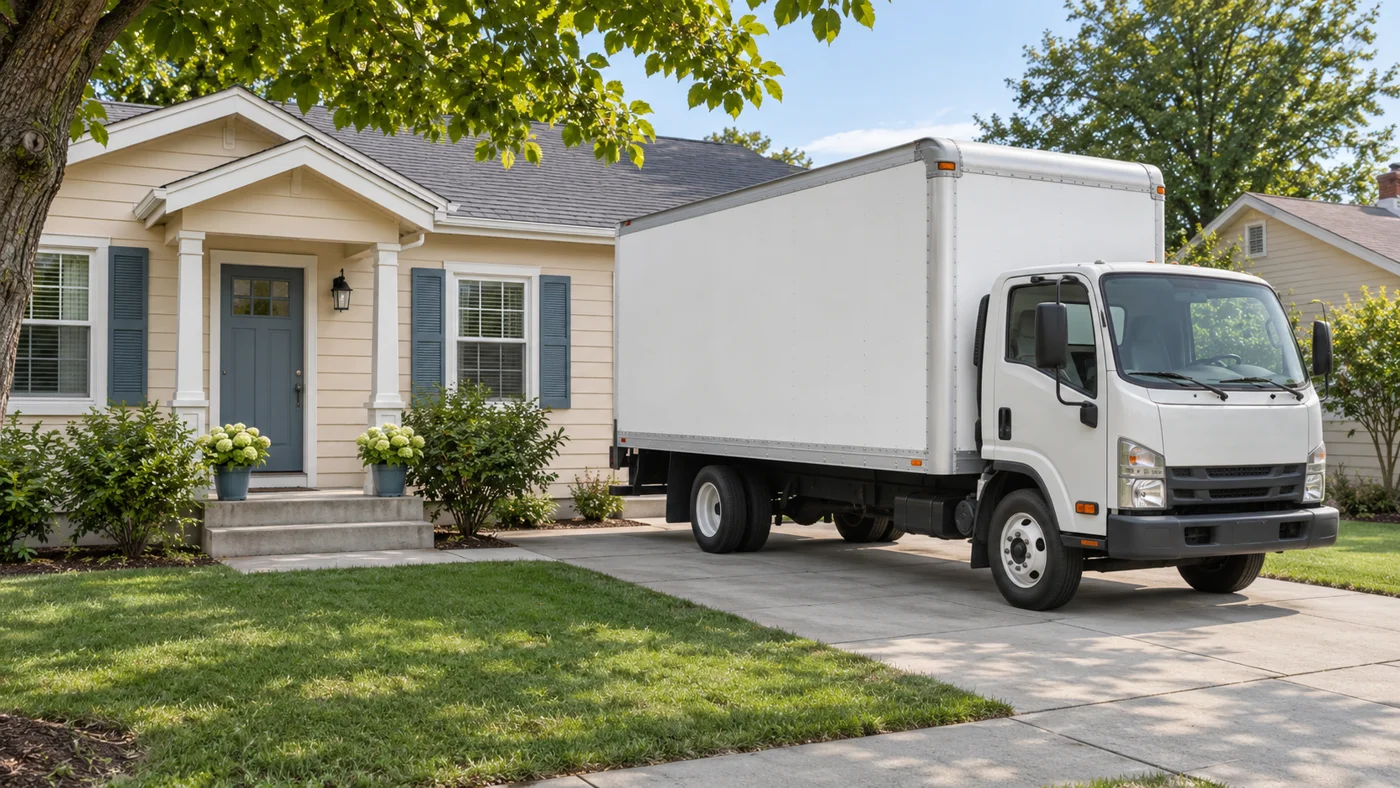
Plan the stopping place before the move
A moving truck needs an appropriate place to stop and a workable route between the vehicle and the property. Confirm both before booking the final service arrangement. Start with the exact addresses, proposed date, expected work period, and the vehicle information supplied by the provider. A convenient space on a map may be restricted, too short, difficult to approach, or unsuitable for loading. The driver and responsible property or local authority need accurate details to assess the plan.
Treat pickup and delivery as separate arrangements. Permission at the old home does not apply at the new one, and the two locations may follow different processes. Record the contact responsible for each address and identify what remains unconfirmed. Do not assume the crew will resolve every parking question on arrival. Parking affects carrying distance, equipment, timing, and potentially the estimate. A clear plan lets the provider price the actual work and gives the household a practical next step if the intended location becomes unavailable.
Identify who controls the space
Determine whether the proposed loading area is public street space, a private driveway, a managed parking lot, a loading dock, or another type of property. Ask the responsible contact about the applicable process. A building manager may control a private loading area but cannot necessarily authorize use of a public street. Likewise, a local street permit may not provide access to a building's elevator or dock. Keep those permissions distinct so one approval is not mistaken for a complete moving arrangement.
Use current official guidance for the exact address and service. Requirements can vary by place, vehicle, date, and activity. For example, Boston publishes a specific moving truck reservation process with its own conditions. That process should not be applied to another city as a general rule. Ask the relevant local authority where uncertainty remains. Avoid relying on an old neighbor's experience or an online discussion as the final answer. The useful record identifies who can approve the space and what that approval actually permits.
Obtain the vehicle details
Ask the mover or rental provider about the vehicle proposed for the job. Record relevant dimensions and any space needed for the loading equipment and working area. The truck's body length alone may not describe the full arrangement. A ramp, lift, doors, or maneuvering approach can require additional room assessed by the provider. Do not select a space solely because a passenger car usually fits there. Give the driver accurate photographs and measurements where available and ask what further information is needed.
If the provider has not assigned a vehicle, explain the site's limitations before it does. A narrow entrance, low clearance, limited turning space, or restricted loading area may affect the choice. Ask whether a smaller vehicle or transfer arrangement is required and how that changes the work and price. Keep the estimate consistent with the agreed access. Do not promise that a large truck can use a driveway or structure whose suitability has not been assessed. The vehicle decision should follow the actual property conditions and appropriate professional judgment.
Check the approach and departure
Look beyond the space where the truck will stand. The provider needs a suitable approach, room to maneuver, and a way to leave. Identify narrow streets, tight turns, grades, overhead obstructions, gates, and other constraints. Use photographs that show the route rather than only a close view of the front door. If a private road or bridge has restrictions, obtain the information from the responsible person. Do not infer suitability from ordinary car access or make an unsupported claim about structural capacity.
If you are driving a rental truck, review route and operating requirements with the rental company and check current official road information. A passenger car navigation suggestion may not account for the vehicle's characteristics. Plan the final approach before reaching the neighborhood so you are not making hurried decisions in a confined space. Ask the appropriate provider or authority about uncertainty. The household's task is to gather reliable information and arrange permission; safe vehicle operation and site assessment should remain with the people qualified and responsible for that work.
Confirm local reservation requirements
Where a local authority offers or requires a reservation or permit, read the current instructions for the actual move. Check eligibility, application timing, location details, duration, vehicle information, posting requirements, and the process for changes. Do not assume a submitted application is an approved reservation. Keep the confirmation and follow the stated steps. If another person applies or posts notices on your behalf, assign that work explicitly and obtain confirmation that it has been completed correctly.
Ask how the reservation interacts with other restrictions at the location. A permit may have limits and should not be treated as permission to ignore every posted condition. If the instructions are unclear, contact the responsible authority before the move. Avoid inventing a standard fee, notice period, or amount of space based on another city's process. Those facts must come from the current local source. Record any unresolved question and the person handling it, especially when the household is moving from far away and cannot visit the destination before delivery.
Follow the approved notice process
If signs, notices, or other steps are required, follow the issuing authority's instructions. Confirm who obtains the materials, where they are placed, and when the action must occur. Keep appropriate evidence or confirmation through the process specified. Do not assume that homemade signs, cones, or a parked personal vehicle create a lawful reservation. Such actions may be ineffective or inappropriate for the location. Use the actual approved method and ask the responsible contact about anything that prevents compliance.
Check the signs or arrangement as the date approaches where practical, without altering official notices or other people's property. If materials are missing or details are wrong, contact the issuing authority or responsible provider promptly. Tell the mover about the status so the crew does not rely on an arrangement that remains unresolved. Keep the record available on moving day. A reservation is useful when the required steps have been completed and the driver understands the permitted location, hours, and limits, rather than hearing only that someone requested a space.
Coordinate building loading areas
Ask the building manager about the approved vehicle location, service entrance, loading dock, elevator, and working hours. Obtain instructions in writing and send them to the mover. Clarify documentation, protection for common areas, and the contact who opens or supervises access. A dock booking and an elevator booking may be separate. The schedule should allow the provider to move belongings through the complete route without assuming that an available truck space means the building is ready to receive the shipment.
Confirm any vehicle dimensions or clearance limits with the responsible parties. Do not guess that the proposed truck can enter a garage or fit below a canopy. Ask what happens if arrival is delayed or another delivery occupies the area. Keep a backup building contact where available. If the property requires a smaller vehicle, discuss that with the mover before the estimate is finalized. The plan should connect the vehicle, loading location, entrance, elevator, and apartment as one assessed route while keeping each permission and appointment clearly identified.

Measure the carrying route
Record the distance and obstacles between the agreed stopping place and the entrance. Include stairs, slopes, curbs, gates, narrow paths, and changes in surface. Tell the mover about the actual route rather than describing access as easy. A longer carry can affect labor and equipment, and it may change the quote. Ask the provider how it assesses those conditions and what preparation the household should complete. Keep the estimate aligned with the confirmed space, especially if the closest possible spot cannot be reserved or used.
Clear ordinary obstacles through an appropriate process and maintain safe access. Do not create a new hazard with loose coverings, scattered cartons, or equipment left across the path. Keep exits and shared routes available according to the relevant instructions. If the route crosses an area used by others, discuss how the work will be managed with the provider and property contact. The household should not improvise traffic control or direct people into unsafe positions. A workable route supports loading while respecting the responsibilities of the driver, crew, property manager, and public users.
Plan for private driveways carefully
A driveway can appear convenient while presenting questions about slope, surface, width, turning space, or load suitability. Give the provider accurate information and ask whether an assessment is needed. Obtain relevant restrictions from the property owner or responsible professional. Do not promise that the truck can use a private bridge, soft shoulder, or unfamiliar paved area without a proper basis. The driver may need a different arrangement after reviewing the conditions. Discuss that possibility before arrival so the household understands the alternative work and cost.
Confirm permission to use shared drives or neighboring property rather than relying on an informal assumption. Keep gates accessible through a secure agreed method and identify the person who can respond if access fails. Avoid leaving the vehicle route blocked by household cars or last minute disposal piles. If a smaller delivery vehicle or different stopping point is required, document the plan. Private property access still needs clear responsibilities and safe operation, even when no public street reservation is involved in the move.
Consider containers as a separate arrangement
A portable moving container may need different placement and permissions from a truck that arrives for a limited loading period. Ask the container provider for the space, surface, access, and delivery requirements for its equipment. Check the applicable property and local process for the container itself. Do not assume a moving truck reservation covers a container left in place. The household should understand where it can stand, how long it may remain, and how collection will occur before scheduling delivery.
Discuss the loading route and security of the surrounding area with the responsible parties. Confirm that doors or access points can be used as intended and that the container will not block required routes. Ask how a delayed collection or changed move date is handled. Keep the provider's placement requirements with the permission record. If the site is unsuitable, consider another approved arrangement before the container is dispatched. A container can simplify some parts of a move, but its placement is a specific logistical task that needs its own confirmed plan.
Prepare for an unavailable space
Ask the issuing authority, property manager, or provider what process applies if the intended space is occupied or inaccessible on moving day. Keep the relevant contact information and documentation available. Do not attempt to move another person's vehicle or invent enforcement powers from a permit. Follow the responsible authority's procedure. Tell the mover promptly so the driver can assess the next safe option. The household should have an understood escalation path rather than trying to resolve the conflict through confrontation while the truck waits.
Discuss practical alternatives before the day where possible. Another approved space may create a longer carry or require different equipment, and the provider should explain the effect on service and charges. Avoid assuming the closest vacant area is permissible. If the arrangement must be rescheduled, coordinate the building and household implications. A contingency plan does not require predicting every obstruction. It identifies the people who can make decisions, the documents needed, and the next step when the original location cannot be used as expected.
Check the arrangement on moving day
Have the current permission, address, location description, time window, and contact details ready for the driver. Explain any change from the information used in the estimate. Keep household vehicles and ordinary belongings out of the agreed work area. Let the driver and crew assess the actual conditions and operate according to their responsibilities. Do not pressure them to use an unsuitable position because it is closer to the door or because another appointment depends on finishing quickly. A confirmed plan still needs to match the conditions present on arrival.
During the work, keep the household contact available and prevent children or pets from entering the vehicle and carrying area. Address questions through the responsible provider or property contact. After loading or unloading, complete any required cleanup or removal of temporary materials according to the permit or property instructions. Confirm that shared areas remain usable and return any access equipment. Retain the relevant records with the moving documents. A careful finish closes the parking arrangement as deliberately as it was prepared and avoids leaving an unresolved property or access issue after the truck departs.
Test a narrow street example
Imagine a household moving from a townhouse on a narrow street to an apartment with a reserved loading dock. The pickup location needs current local parking guidance, while the destination needs a building appointment and vehicle clearance check. This hypothetical example does not establish the rules for either address. It shows why the household should separate the two arrangements. The mover needs the proposed vehicle details, the confirmed stopping locations, and the carrying routes before it can assess the complete job and explain any access related work.
If the pickup space is farther from the door than expected, the household should update the provider and request clarification of the scope. If the destination dock cannot accommodate the proposed vehicle, the plan needs revision before dispatch. The elevator appointment must then fit the revised arrangement. Work through your move in the same way, tracing the goods from each room to the truck and into the new home. Every uncertain permission or physical limitation should produce a specific action, such as contacting the authority, obtaining a measurement, or asking the driver for an assessment.
Keep one current access record
Maintain a short record for each address showing the approved location, dates, hours, responsible contact, vehicle information, and required actions. Include the status of applications, notices, and building reservations. Keep sensitive gate codes or private access details in an appropriate channel rather than on public labels. Share the relevant record with the mover and any helper assigned to prepare the site. If an instruction changes, update the working copy and notify the affected people so the household does not rely on several conflicting versions.
Review the record shortly before moving day and close any outstanding task. A request submitted, a notice ordered, and a reservation approved are different stages. Mark completion only when the required step has actually occurred. After the move, retain permissions and related correspondence for as long as they remain useful for any open question, then organize them with the other moving records. Clear documentation helps the household explain what was arranged and respond to a concern without reconstructing a busy day from memory. It also gives a backup contact enough information to assist when the main moving contact is traveling or occupied with another part of the handover.
Keep the next action visible until the responsible authority or provider confirms that the arrangement is ready.