
Begin with the few facts that control the move
For your first move, start with the addresses, the dates, and the belongings. Write down where you are leaving, where you are going, when you must leave, and when you can enter the new home. These dates may differ. A lease start, a key collection appointment, and a moving truck arrival are separate arrangements. If something is uncertain, mark it as a question instead of filling the gap with a hopeful assumption. The rest of your plan should work around confirmed facts and visible uncertainties.
Create one place for the information: a notebook, document, or simple folder system that you will actually use. Keep contacts, reservations, estimates, and tasks together. You do not need a complicated project management system to move a household. You need to know the next action, who will do it, and when it matters. Review the list regularly as decisions become definite. This prevents the move from becoming a collection of messages, screenshots, and remembered conversations that only make sense to the person who happened to receive them.
Choose a regular time to review the plan with anyone sharing the move. A short check can establish what changed, what is blocked, and what each person will do next. Keep decisions in the same record instead of relying on a conversation one person missed. If you live alone, use the review to compare the plan with your actual available time. You may need to reduce the shipment, obtain help, or change a reservation before a deadline becomes difficult. Planning is useful because it exposes those choices early. It should help you act, rather than becoming a detailed list that you never revisit after writing it during the first burst of enthusiasm about the new home.
Find out what is really yours to move
Walk through every room and storage space. List large furniture, appliances you own, likely cartons, and special items. Include belongings in a garage, basement, shared cupboard, or another person's home. Clarify ownership where you live with family or roommates. A useful object may belong to the household you are leaving rather than to you. Ask before packing it. Also identify items that stay with the property under the relevant agreement, instead of assuming every removable object can travel with you.
Sort your own belongings into moving, selling, donating, disposing of responsibly, and undecided. Resolve the undecided group before finalizing transportation where possible. Do not rely on a last minute buyer or donation collection without confirmation. Measure large furniture against the new rooms and the route into them. A piece can fit in the room but fail to pass through a doorway or stair turn. Reducing the shipment before moving day saves handling and gives you a clearer picture of what the new home actually needs.
Choose the help you need
Break the work into packing, lifting, transportation, unloading, and setup. Decide which tasks you can safely and realistically do. You might pack ordinary belongings and hire movers for transport, use a container with separate labor, or arrange a rental vehicle and suitable help. A full service label does not automatically include every task, so ask what the written scope covers. Likewise, a rental vehicle does not provide a crew, packing supplies, or someone to manage difficult furniture unless those services are separately arranged.
Consider available time and experience as well as money. Friends may be willing to help but unable to handle heavy or awkward pieces safely. Driving a loaded rental truck is a different task from driving your usual car. Ask for instructions and choose assistance where necessary. A hybrid plan can work well when responsibilities are clear. Write down who brings equipment, who loads, who drives, and who unloads. If one task has no assigned person or provider, the plan still has a gap regardless of how many reservations you have made.
Build a budget from actual arrangements
List transportation, labor, packing materials, equipment, travel, accommodation, storage, and other costs relevant to your move. Use written quotes when available and label remaining amounts as estimates. Do not compare a mover's complete service with only the base rental truck price. Add the work and supplies you would need to provide yourself. Include expenses created by a gap between homes, such as temporary lodging or a second delivery. A budget should describe your sequence of events rather than a generic average found online.
Record payment dates and deposits. Some deposits form part of the total price, while refundable deposits temporarily reduce the cash available to you. Keep those distinctions clear to avoid double counting or spending money you still need for another payment. Read cancellation and rescheduling terms before booking. If the plan changes, ask how the cost changes and keep the written answer. A reasonable reserve can help with uncertainty, but it should complement accurate planning rather than replace questions about the services you are buying.
For a hypothetical first apartment move, separate the cost of moving existing belongings from the cost of furnishing the new space. You may need a bed, kitchen basics, or cleaning supplies, but those purchases do not belong inside a transportation quote comparison. Keep them in the overall household budget with their own priorities. Delay optional purchases until you know what fits and what the property already provides. This prevents the moving reserve from disappearing into decorative items before essential bills are paid. Measure before buying large furniture and check how it will be delivered. A new purchase can create the same doorway or scheduling problem as a piece you already own, so include its arrival in the plan.
Learn what a moving estimate tells you
Give each prospective mover the same inventory, addresses, and access details. Ask for a written estimate describing the work and the basis of the price. Show stairs, elevators, long carrying routes, and unusual items during any survey. Ask what is included and which circumstances can change the amount. A quick online figure may begin the conversation, but it may not reflect the actual household. A lower quote can represent less work or different assumptions, so compare the descriptions before choosing by total alone.
Identify the legal company name and whether it performs the move or arranges service through another provider. Check the requirements appropriate to your route through official sources, distinguishing interstate household moves from moves within one state. Ask who handles scheduling and questions on moving day. Read payment and cancellation terms, and do not sign documents with important blanks. Save messages about changes. You do not need to become an expert in the moving industry, but you should understand the particular agreement under which someone will take possession of your belongings.
Check access at both homes
Ask the property owner or manager about loading locations, moving hours, elevator reservations, and any protection required for common areas. Check necessary street arrangements with the relevant local authority where applicable. Tell the mover exactly where the vehicle can stop and how belongings reach the entrance. Do this for the address you are leaving and the one you are entering. An easy pickup does not guarantee an easy delivery, and two buildings may impose appointment windows that require careful coordination.
Measure bulky furniture against doors, hallways, and stair turns. Keep access keys, cards, and confirmation messages outside packed boxes. Choose a contact who can open doors and answer questions throughout the appointment. If a piece may require disassembly or specialist handling, discuss it before moving day. Do not assume a crew can remove fixtures or alter the building. Clear access details help the provider choose equipment and plan labor, while giving you a chance to resolve problems before the truck is waiting outside.
Make a packing plan you can finish
Start with belongings you use infrequently and leave daily essentials until later. Set a realistic amount of work for each session, including sorting, wrapping, labeling, and cleanup. Packing one cupboard completely teaches you more about the time and materials required than imagining the whole room at once. Keep a supply station and move finished cartons to an agreed staging area with labels visible. Avoid spreading open boxes across every room, since that can make it difficult to find supplies or continue ordinary household routines.
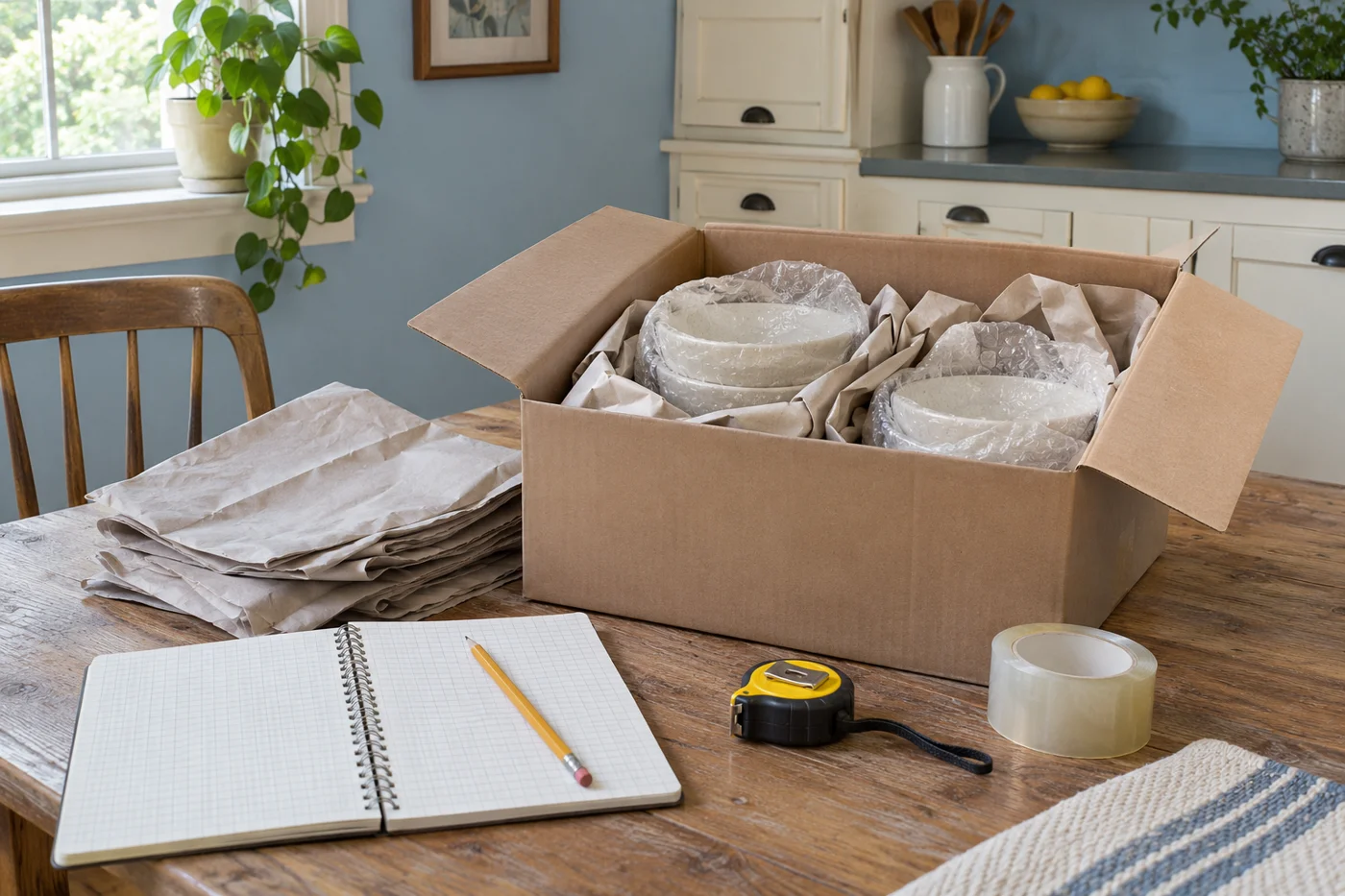
Use suitable cartons and protective materials. Dense contents belong in manageable loads, and fragile objects need support and separation. Inspect reused boxes for damage or moisture. Ask the provider about restrictions and packing requirements before sealing uncertain contents. Keep furniture hardware and accessories in clearly labeled containers linked to the correct item. If you hire packers, sort belongings and identify items that stay before they arrive. Professional help can prepare the shipment, but you still need to make ownership and destination decisions.
Label for the destination
Choose simple room names and use them consistently. A carton labeled bedroom is ambiguous when the new home has several bedrooms, so use a person, room number, or another clear distinction. Add a brief contents description and a box number if you keep a detailed inventory. Put the same room names on signs at the destination. This lets helpers and movers place cartons without repeatedly asking you where each one belongs, and it reduces unnecessary carrying after the crew leaves.
Keep valuable or sensitive details in a private list rather than displaying them outside. Use handling notes when they communicate a real need, and remember that labels do not replace suitable packing. Limit open first labels to the cartons you actually need early. Keep personal essentials separate from those cartons if you cannot guarantee access to the shipment. Review labels as you seal boxes, since correcting a vague description while the contents are visible is easier than opening several similar cartons at the new home.
Keep important records and essentials with you
Prepare a bag or small group of containers for the period before the shipment is unpacked. Include clothing, toiletries, chargers, essential documents, and supplies needed for your daily routine. Keep medication according to its storage requirements and outside a shipment you cannot access. Think through your first evening and next morning: where you will sleep, how you will wash, what you will eat, and whether you need to work or attend an appointment. Pack to support those specific activities.
If delivery is a window, prepare for the actual period you could be without the main shipment rather than the earliest possible arrival. Confirm what temporary accommodation provides before carrying duplicate household items. Assign keys and documents to the person who will need them if household members travel separately. Mark the essentials area clearly so helpers do not load it by mistake. A well prepared bag is useful only when it remains with the right person and can be reached at the right time.
Arrange utilities and address changes deliberately
List the services and organizations that need an address update or an account change. Use your own records to identify them rather than relying on a generic list alone. Confirm the old service end and new service start where relevant, and keep reference numbers without exposing passwords or unnecessary account details. Coordinate with the property owner or provider when you are unsure which services belong to you. A new address does not automatically transfer every account, and canceling a service too early can create problems before you leave.
Prioritize the services needed for a functioning arrival, then work through less urgent updates. Keep confirmation messages and check that the effective dates match your actual possession dates. If the housing schedule changes, revisit these arrangements rather than assuming the providers will learn about the change elsewhere. Use a simple tracker with requested, confirmed, and followup status. The purpose is to prevent a task from being treated as finished merely because you sent a message. Some changes require a separate confirmation before you can rely on them.
If you are leaving a shared home, clarify who remains responsible for accounts after your departure. Do not cancel a service used by other occupants merely because your name appears on a bill without first understanding the provider’s transfer process and your agreement with the household. Record the arrangement and keep confirmation of any change in responsibility. At the new home, ask which accounts you must establish yourself and which are handled by the owner or building. Avoid assuming that a working light or internet connection means the correct account arrangement is complete. Check the details directly with the appropriate person or provider. A clear handover protects your budget and avoids inconveniencing people who remain at the old address after your belongings have moved elsewhere. Keep these confirmations with your other moving records so you can answer a later billing question without reconstructing the entire conversation.
Plan care and travel separately from the goods
If children, pets, or relatives need care during loading, arrange it before the crew arrives. Moving creates open doors, unfamiliar activity, and carrying routes that should remain clear. Assign responsibility rather than assuming another person is supervising. Keep the necessary supplies and records with the person managing that part of the journey. A mover transports the agreed household goods; do not assume it also provides transport or supervision for household members. Personal travel needs its own schedule and arrangements.
For a longer journey, confirm accommodation and transportation before leaving. Check relevant travel conditions near departure and avoid setting an unrealistic driving schedule after a day of heavy work. If you rent a vehicle, follow its instructions and make sure the driver is authorized under the agreement. Keep contacts available in more than one accessible form. A simple written address and phone number can be useful when a phone is unavailable. Agree on meeting points and updates if people travel separately, so the plan does not depend on everyone staying together throughout the route.
Know what happens at pickup
Begin with a walkthrough. Show the crew the belongings that stay, unusual items, existing condition concerns, and the approved loading route. Keep your estimate and inventory available. Choose one household contact to answer questions and approve changes within agreed limits. If you cannot attend, give your representative the information needed to make those decisions. Someone with a key but no knowledge of your belongings may be unable to distinguish an item sold with the home from one that belongs in the shipment.
If the job changes, ask what solution is proposed and how it affects the work or price before approving it. Record the agreement. As rooms empty, check closets, cupboards, storage areas, and temporary staging spots. Keep personal travel bags separate. Before handing over keys, inspect the property and complete the agreed security or handover steps. Do not assume a room is empty because its largest furniture has gone. Small items behind doors or on high shelves are easy to miss during a busy loading day.
Know what happens at delivery
Prepare room labels and a simple placement plan for large furniture. Keep entrances and paths clear. Compare arriving goods with the inventory and note visible issues through the provider's procedure. Use specific item or carton references and keep relevant photographs. Read the delivery paperwork and ask about statements you do not understand before signing. Retain copies. If damage or missing items require a separate report, ask how to submit it rather than assuming an informal conversation with a crew member completes the process.
Check the unloading area and vehicle for overlooked belongings where permitted. Keep packaging relevant to a concern until you understand the documentation requirements. Once the crew finishes, establish a safe route through the home and locate the essentials. You do not need to unpack everything immediately. A functioning bathroom, sleeping area, and basic kitchen give you a practical base for the remaining work. Keep the inventory accessible as you open cartons so missing pieces can be identified clearly instead of becoming a vague feeling that something has not arrived.
Unpack in an order that supports daily life
Work through essential rooms before decorative or occasional use belongings. Open one area at a time and check packing paper for small hardware or accessories before disposal. Keep assembly tools in a known place. Follow instructions and arrange qualified installation where equipment requires it. Avoid improvising a connection or repair because you are tired and want the room finished. If furniture does not suit the new layout, place it safely while you decide what to do rather than blocking the main route through the home.
Separate empty packaging and confirm appropriate reuse, recycling, or disposal options. Do not allow boxes to collect in exits or shared spaces. Keep a short list of unfinished tasks, such as assembling a shelf, finding a cable, or contacting a provider. Give each task a next action so it can be completed. Unpacking often feels endless when every room remains partly open. Completing usable areas and recording the remaining work gives you a clearer sense of what is actually left.
Close the move and keep useful records
Compare the final bill with the estimate and authorized changes. Ask about charges you cannot identify and retain the explanation. Return rented equipment, close temporary storage arrangements, and confirm service changes at the old home. Keep receipts, inventories, and relevant messages until outstanding matters are resolved. Check that no belongings remain with helpers or at an intermediate location. A move involving several stops needs a final check of those locations as well as the main shipment.
Review the remaining list after the household can function. Complete account corrections, return borrowed items, and follow up on unresolved delivery concerns through the appropriate process. If you leave a public review, describe the service you purchased and what happened without sharing private information. Your first move is complete when the home works and the responsibilities are accounted for. The experience will also show which planning methods helped you, giving you a useful starting point if you move again rather than a collection of half remembered lessons.