
Plan the box for handling as well as space
A box can have room for more contents and still be unsuitable for the people or route involved in the move. Treat weight, size, grip, contents, and the carrying environment as separate questions. The aim is a sound package that can be handled using an appropriate method. Filling every available space with dense goods is not a useful goal if the carton becomes difficult to control or its structure begins to fail.
Start with the contents and the planned handlers. Books, tools, dishes, and collections of small metal objects can become heavy quickly. Bedding and other light bulky goods create a different packing problem. Choose boxes accordingly and follow the container and provider instructions. Do not use one large carton size for every room simply because buying a uniform stack feels convenient.
This guide does not prescribe one safe lifting weight for every person and situation. Health and Safety Executive guidance on manual handling considers the task, load, environment, and individual capability together. Use appropriate professional help or equipment when needed. A number written on a carton cannot establish that a particular person can carry it safely down stairs or through a narrow route.
Identify dense contents before packing
Look through each room for goods that add weight faster than volume. Bookshelves, tool drawers, kitchen cupboards, and hobby collections deserve deliberate grouping. Separate these contents from lighter bulky items while planning supplies. A large box intended for blankets should not become a convenient place for every dense object left over at the end of the room.
Pack a representative group before repeating the method across many cartons. Check whether the box remains sound and whether the intended handling method is appropriate. If the arrangement is unsuitable, change the grouping or container early. Repacking one sample is easier than discovering that a whole collection of sealed boxes is too heavy or awkward for the available crew.
Use the inventory to keep track of divided groups. Several smaller book cartons can share a clear category and distinct identifiers. Splitting contents does not need to create confusion if the labels remain consistent. Avoid preserving one oversized carton merely because it keeps a collection together. The collection can remain organized across multiple packages that are better suited to handling.
Choose sound boxes for the intended contents
Inspect reused boxes for weakened seams, damaged corners, moisture, or other deterioration. A box that once held a heavy load may no longer be suitable after storage or repeated use. Follow any relevant manufacturer information and the mover's packing instructions. Do not assume additional tape restores every damaged carton to a dependable condition.
Use the right size and construction for the contents. Ask the provider about specialty cartons when the goods require them. A container's stated rating or intended use concerns the package and its conditions of use; it is not a personal lifting recommendation. Keep those ideas separate. The box must be suitable for the load, and the handling method must also suit the people, equipment, and route.
Prepare the bottom and closure according to the box or provider instructions. Check the package during filling rather than waiting until it is sealed. If the base bends, seams open, or sides distort, stop and revise the arrangement. A carton that can be forced closed may still have too much pressure on its contents or structure. Sound packing should not depend on the flaps holding an overfilled shape together.
Keep weight and internal movement under control
Arrange contents so the package is stable and the objects are protected appropriately. Prevent loose movement with suitable packing materials, while avoiding unnecessary weight from unrelated filler. A carton that shifts unpredictably can be difficult to handle even when its total weight seems manageable. The packing should preserve the contents and help the handler understand the load.
Do not mix fragile lightweight objects beneath dense goods simply to use every gap. Consider what will press on what when the carton is handled. A box of books and delicate ornaments may be a poor combination even if both belong to the same room. Grouping by compatible handling needs can be more useful than grouping solely by location.
If you combine a modest amount of dense contents with lighter compatible material, keep the purpose clear and check the result. Do not treat a layer of towels as a way to justify an already unsuitable load. The carton should remain manageable, properly closed, and protective of every item inside. When uncertain, divide the contents and use a suitable additional box rather than trying to rescue an overfilled package.
Consider size and grip separately from weight
A light but very large carton can obstruct the handler's view or be difficult to hold. A compact dense box can create another kind of challenge. Review both dimensions and contents when choosing the package. Avoid assuming the lighter carton is automatically easy to carry through a doorway or stair turn. The carrying route and available equipment matter to the decision.
Use containers as designed and do not cut improvised handles into a box without appropriate guidance. Altering the sides can weaken the package or expose contents. Ask the provider about suitable containers or handling equipment when grip is a concern. A household packing decision should not require helpers to invent a way to hold an unstable carton at the loading door.
Keep the exterior free of loose straps, sharp protrusions, or confusing attachments. Close the package properly and make labels visible without covering essential container information. If the object cannot be packed into a manageable ordinary carton, ask about a suitable alternative. Some goods need specialist preparation or handling instead of a larger box and more determination.
Use a scale as information rather than permission
If you weigh cartons, record the result accurately and use consistent units. A scale can help identify a box that differs substantially from similar packages or compare two packing arrangements. It does not assess the handler, route, frequency of carrying, or suitability of equipment. Do not treat a reading below a chosen number as proof that the task is safe for everyone.
Avoid creating a hazardous lift merely to place a difficult box on a scale. Choose an appropriate method or ask the provider for help. The measurement should support the packing plan rather than become another awkward handling task. If a carton already appears unsuitable, reduce or repackage it before trying to prove its exact weight.
Keep any stated weight clearly distinguished from an estimate. If you mark a carton with a number, include the unit and do not imply precision you have not measured. Ask the mover whether it wants weight markings or another handling note. A useful label communicates relevant information, while the crew still decides how to handle the actual package within its procedures.
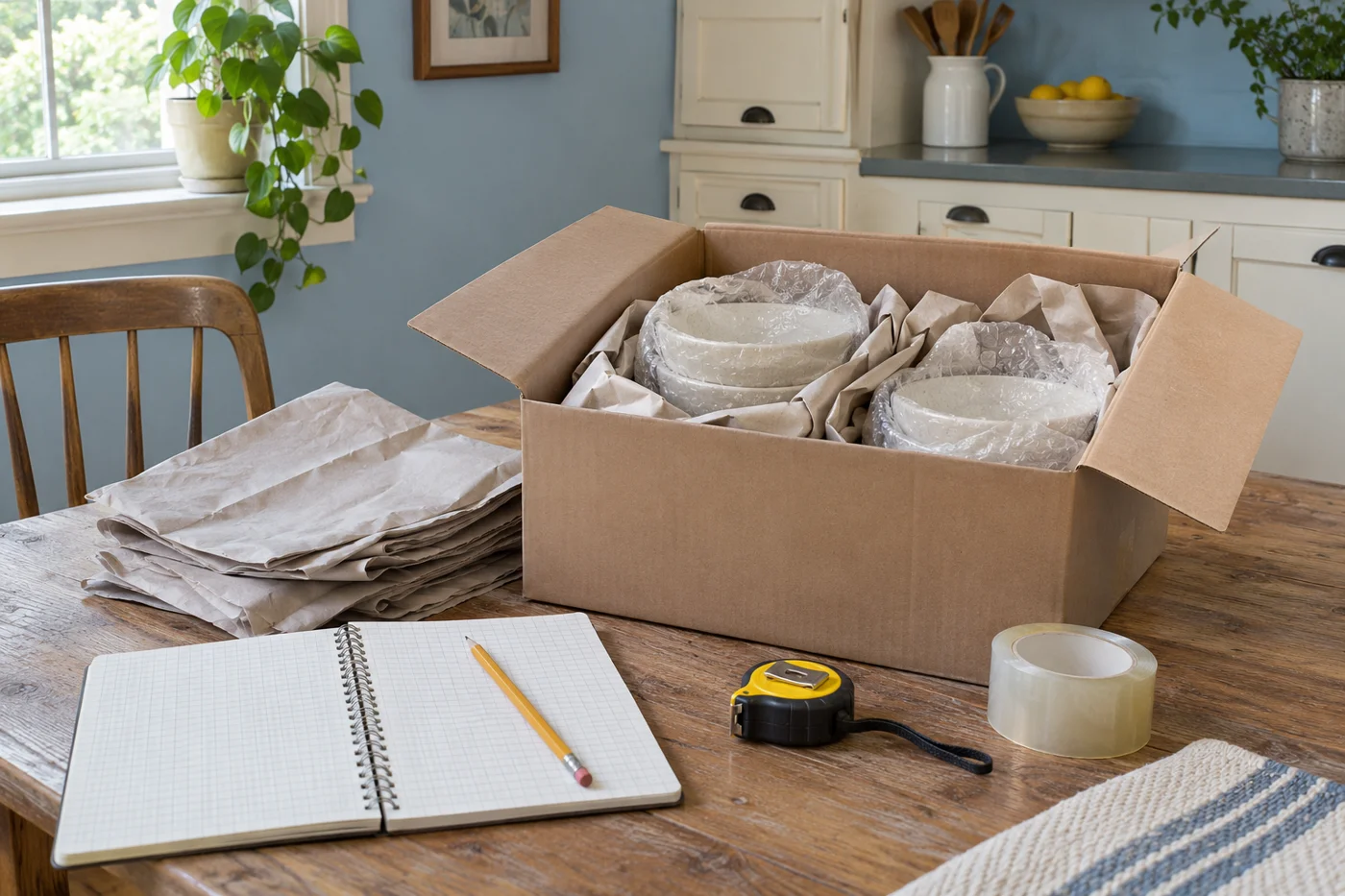
Plan the carrying route before sealing the pattern
Review stairs, narrow passages, doorways, surfaces, and the distance to the vehicle. A box that seems manageable beside a packing table may be unsuitable for repeated carrying through a difficult route. Tell the mover or hired helpers about those conditions before the job. Ask what preparation or equipment is appropriate rather than expecting the crew to compensate for every packing decision on arrival.
Keep paths clear of packing debris, loose objects, and unfinished cartons. Arrange safe access through the owner or manager where needed. Do not leave the heaviest boxes in a place that requires unnecessary reaching or awkward retrieval. Discuss staging with the provider so the packages remain accessible without blocking the route needed for furniture and later loads.
Consider the destination too. A move from a ground floor house to an apartment with stairs changes the unloading task. Pack for the complete journey instead of optimizing only the first carry. If the receiving crew is separate, make sure it knows what is arriving and what equipment or access is available. A suitable origin plan should not create an unreviewed problem at the other end.
Repack a problem box before moving day
Open an unsuitable carton in a clear area and divide the contents into sensible groups. Keep the relevant protection around fragile objects and replace damaged packaging where needed. Remove items as needed, then secure the remaining goods appropriately before closing the carton. The revised box still needs a stable arrangement, appropriate closure, and a clear label.
Update the inventory and identifiers after dividing the contents. If one box becomes two, avoid leaving both with the same unique number. Record the change so the household can find the contents at delivery. Tell the mover about a substantial change in the shipment when appropriate. A packing improvement should not create a mismatch between the physical cartons and the record used to count them.
Keep spare suitable boxes and supplies available until packing is complete. A shortage near departure can tempt people to overfill whatever remains. Review the supply plan after packing the dense rooms rather than assuming the initial estimate will fit exactly. It is easier to obtain the right materials while there is time than to improvise under pressure as helpers wait.
Coordinate expectations with helpers and movers
Tell helpers what you have packed and which cartons need particular attention. Do not describe a difficult box as easy because you want to finish quickly. Encourage people to stop and reassess a load that is unsuitable for them or the route. Arrange professional assistance where the work exceeds the group's experience or equipment. The plan should make room for those decisions without treating them as an inconvenience.
Ask paid providers about their packing requirements and equipment. If you hire labor separately from a truck, confirm who supplies the relevant materials and handling aids. Follow equipment instructions and ensure the people using it are capable of doing so. Equipment can change the method, but it does not make every load or surface suitable automatically.
Keep heavy or awkward cartons identified in the agreed way and let the crew organize its handling sequence. Avoid directing improvised lifting or stacking methods that conflict with the provider's procedures. Your responsibility is to supply accurate information and suitable preparation, while the trained crew manages the work it has accepted. Clarify any disagreement before the affected task proceeds.
Avoid using labels as a substitute for preparation
A heavy or fragile marking can alert a handler, but it cannot strengthen a weak carton or stabilize loose contents. Inspect the package before relying on the label. If the box is distorted, poorly closed, or unsuitable for the contents, repack it. The most useful label accompanies a sound package and describes what the person handling it needs to know.
Use destination room names and a short contents category consistently. Add a unique carton identifier when it supports your inventory. Keep detailed information about valuables privately rather than displaying it on the outside. A package should be easy to place and account for without exposing unnecessary personal information or requiring someone to open it during unloading.
Mark priority cartons selectively. A dense box of reference books may belong in an office but may not need immediate unpacking. Keep first use supplies in manageable, accessible groups. Clear priorities help the household avoid opening or moving heavy cartons repeatedly while searching for one essential object that should have traveled separately.
Compare two book packing arrangements
Imagine a household has several shelves of books and a stack of large cartons. Filling one large carton with books may produce a package that is difficult for the planned handlers and route. The household instead uses smaller suitable boxes, protects the contents appropriately, and checks each package. It labels the cartons with distinct identifiers under the same office books category.
The household reviews the path from the room to the truck and tells the mover about stairs at the destination. If it weighs the boxes, it records the actual units without presenting a number as a universal safe limit. It keeps the packages accessible and leaves handling decisions to the appropriate crew. The collection remains organized even though it is divided across more cartons.
This example shows why fewer boxes is not automatically a better packing result. The useful comparison considers the package, contents, handlers, route, and equipment together. Apply the same approach to dishes, tools, records, and other dense categories. A manageable set of clearly labeled cartons can be easier to plan and account for than one oversized container whose apparent efficiency disappears during handling.
Check the finished cartons as a group
Before moving day, walk through the packed areas and look for cartons that differ from the planned pattern. Check weak closures, bulging sides, damp cardboard, missing labels, and mixed contents that need review. Identify any package that helpers have already struggled to handle. Resolve those issues before the crew arrives where possible. A final check should produce specific corrections rather than a general reminder to be careful.
At delivery, place cartons in their intended rooms without blocking access and inspect any visible damage. Record concerns with photographs and the relevant identifier, then follow the provider's reporting process. Keep necessary materials until the issue is understood. When unpacking, remove packaging gradually so empty boxes do not obstruct the routes still needed for furniture or household movement.
The purpose of box weight planning is a workable handling arrangement. It combines suitable containers, compatible contents, clear labels, appropriate equipment, and realistic decisions about who performs the task. It does not depend on filling every carton to its capacity or assigning one weight target to every person. Review the actual packages and the complete route, then change the plan when those details show a problem.
Keep a simple record of packing adjustments
Note the categories that required smaller cartons or special attention during packing. This helps other household members follow the same approach. A brief instruction such as use the smaller book cartons is easier to apply than asking everyone to judge an undefined maximum. Keep the instruction connected to the containers and contents, and invite helpers to flag a package that still seems unsuitable for the planned work.
Review the supply estimate after those adjustments. Dividing dense contents may increase carton count while making the arrangement more workable. Update labels and inventory quantities accordingly. Do not interpret a packing calculator's initial box count as a requirement to fit everything into that number. Such estimates use assumptions, while your household's possessions and handling conditions determine the preparation needed.
Before the loading review, identify who will resolve any remaining problem carton and where spare materials are kept. A clear responsibility prevents everyone from noticing the weak box while assuming someone else will repack it. Keep that work outside the active carrying route and communicate the revised identifier when finished. This coordination step connects the packing decision with the inventory and the crew's understanding, allowing the move to proceed with a current account of what is ready and what still requires attention before handling begins at the property.